Virginia Tech’s Academic Building One Design: A Focus on Sustainability and Connectivity
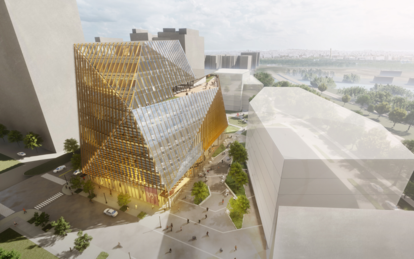
Virginia Tech's Academic Building One features a design centered on the principles of sustainability, health and wellness, green and social spaces, accessibility, connectivity, flexibility and integrated technology.
Architectural renderings of the building — designed by SmithGroup, one of the world’s preeminent integrated design firms — were filed with the city this month as part of a Development Special Use Permit concept submittal.
SmithGroup was chosen through a public process to provide integrated architecture and engineering design services for Academic Building One. The university expects to break ground in 2021 and welcome students, faculty and staff into the completed building in fall 2024.
When completed, the 300,000-square-foot building will provide instruction, research, office, and support spaces for graduate-level programs in Computer Science and Computer Engineering, as well as select other programs. Experiential learning environments within this building will be designed to enhance the Virginia Tech experience including flexible multi-purpose areas, research and testing labs, and maker spaces.
SmithGroup is utilizing state-of-the-art computational and generative design techniques to inform the building’s unique geometry. The form was sculpted to capture the sun’s light and energy to maximize photovoltaic power generation. The building will be capped by a solar array and photovoltaics will be incorporated into the glass of the facade. It will also be staged to deploy sewage water energy exchange and geothermal energy to offset energy usage in future phasing.
The academic building incorporates opportunities for daylight, while addressing solar heat gain, glare and occupant comfort. Occupants will have access to nature through connection to open space and parks in the district, and within the building via multiple terraces. The ground floor will be welcoming and active, with exhibits in the lobby and transparency toward the campus green. The university can put science on display to better connect with the local community and attract future students.
SmithGroup is also taking inspiration from Virginia Tech’s Blacksburg campus by including dolomite limestone (“Hokie Stone”) in the landscape, and together with the university’s staff, is exploring special use of the stone at the base of the building, to balance the glass and metal facades with the warmth and solidity of natural stone.
Learn more on the Institute for Advanced Computing website.
For more information about SmithGroup, please visit our Company Fact Sheet.