Bridging the Assessment Gap
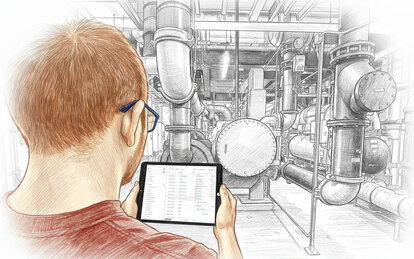
The goal of a facility assessment isn't data collection. It's establishing owner trust in its accuracy and usefulness. SmithGroup's customized digital workflow overcomes the problematic gap between fieldwork and reporting, delivering clear findings that owners can confidently act on.
Facility assessments are essential for owners with large portfolios who need to prioritize upgrades and manage complex program and capital decisions. Completing them well requires a level of consistency that is difficult to sustain across surveyors, sites and weeks of fieldwork, especially when portfolios span multiple locations.
The significant work required to go from room to room and building to building, assessing and documenting the condition of every space and system, is also just the tip of the iceberg. Synthesizing thousands of survey notes and photos into a coherent, actionable overview can be a cumbersome, time-consuming task: one that risks serving no useful purpose if the final report is not thorough or digestible enough.
That’s why facility owners frequently hire A/E firms to conduct their surveys and translate their findings into defensible priorities. It’s also why SmithGroup’s Technology in Practice team worked with our survey teams to implement a customizable workflow that seamlessly bridges the gap between fieldwork and reporting.
The flow between fieldwork and reporting breaks down in two distinct ways.
- The Analog Problem: “Just write it down and we’ll type it up later.”
An analog facility assessment involves a toolkit of floor plans, notepads and cameras. Teams take photos in one app and write notes by hand or type into another app. While it seems easy, a lot of work awaits back in the office. Each team member must transfer notes, organize their photos and summarize their findings.
This culminates in the time-consuming task of compiling everything into a cohesive report. If each facility visit requires a few days on site and another week of office time to summarize and compile, plus a window for final formatting, the project team can only reasonably cover one to two facilities per month.
- The Digital Problem: “The app didn’t work.”
Every former analog survey team starts out confident that their new mobile devices will make their jobs easier. But a workflow that sounded better in theory can quickly turn onerous on site. Working with an app that is not specifically designed for the task at hand often takes too much time and mental energy to use well. While trying to keep their focus on the physical environment, architects and engineers become justifiably frustrated with constant scrolling, app switching, irrelevant data fields and a workflow that feels slower than just writing by hand.
This frustration is a critical barrier. If the digital process feels like a burden, team members will revert to what is comfortable, creating a hybrid workflow where some data is in the system and the rest is captured in scattered notes and photo libraries. This defeats the purpose of the digital tool and creates the same data cleanup problem it was meant to solve.
SmithGroup's assessment platform allows our teams to design an optimal structure for the information they’re collecting on site, then export the data into a report-friendly format that’s ready to deliver and use. By streamlining the fieldwork while ensuring a higher quality output, we can assess more with less grind.
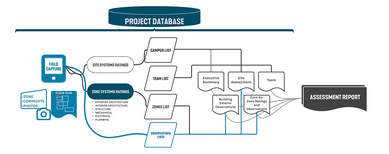
Pairing a customized digital tool with a well-defined project database structure allows the assessment process to flow seamlessly from data collection to automated report creation.
Henry Ford Health: Creating a Workflow That Works
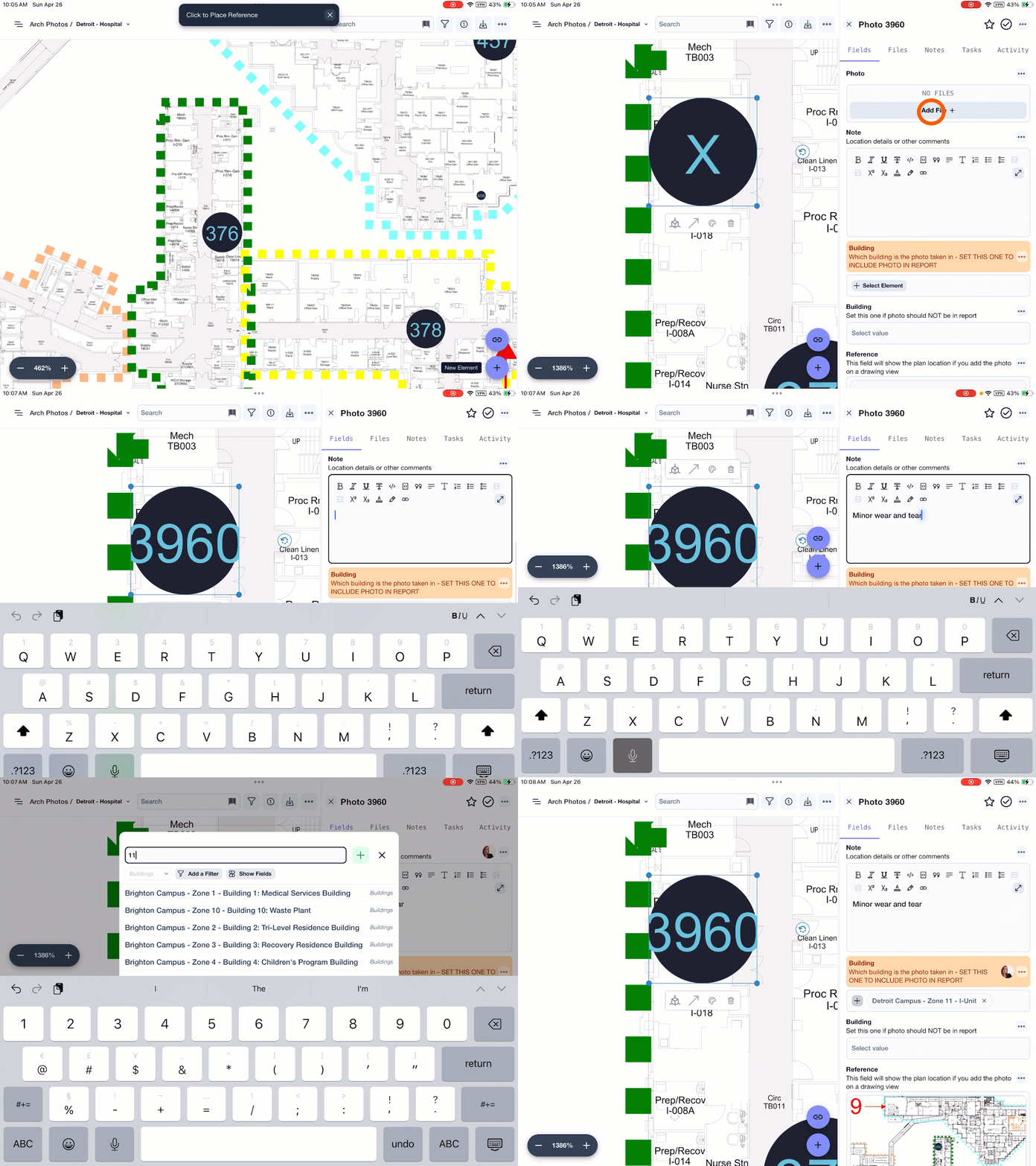
For a recent facility assessment project with Henry Ford Health, we managed to overcome the tool adoption barrier by carefully designing the workflow in a flexible mobile app called Layer; this provided a way to precisely locate and notate field data on maps, drawings and building models. But it’s not enough to just log in and head out to take photos. Our expert team started by considering how Henry Ford Health thinks about and manages its portfolio to determine how they needed their assessment data to be formatted and organized. We meshed those decisions with the options for entering data on site, and built a surveying strategy that minimized view-switching and scrolling and only included the data fields needed to build the final report.
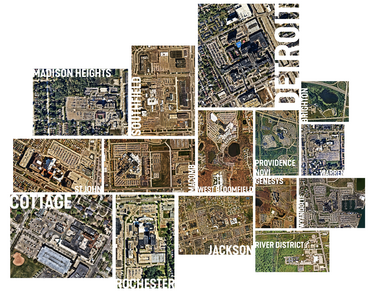
The client needed a consistent condition assessment for over 13 million square feet of buildings across its 15 hospital campuses, segmented into 140 zones based on their construction history.
For every system in every zone, team members were prompted for a 0-5 rating and an explanatory comment. The ratings could be completed on site or after the visit, aided by collected photographs. For each photo taken, the platform automatically generated a plan thumbnail with a dot indicating its precise location. This simple, intuitive workflow allowed the team to capture all necessary data on-site and easily reference it later as needed.
These benefits were compounded on the back end of the process; once the report template was designed, it could be regenerated for each new facility with a few clicks. This streamlined process was so efficient that a single project team was able to complete all 15 campus assessments on schedule, resulting in a 20% reduction in the hours budgeted for the effort.
The process not only reduced the number of surveyors needed, it gave the team more context to draw from as they completed each assessment, resulting in a more consistent deliverable across campuses. It also supported asynchronous work; the exterior and site teams could survey all campuses during good weather, knowing their data was ready to export when the interior teams finished their work.
Trust But Be Able to Verify
This 21st-century workflow does more than save time; it also builds an owner's confidence in the findings. Because photographs are captured as a structured data type alongside ratings and notes, the survey team is essentially showing their work: giving clients direct visual evidence of every observation.
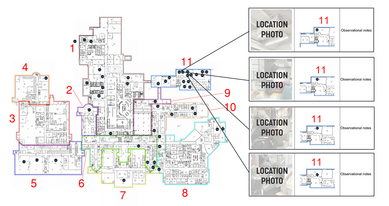
For Henry Ford Health, this meant reports rich with photographic documentation, with a summary table of ratings condensed to a single page. The client could see exactly how much work went into the assessment and understand which observations led to each finding without having to scrutinize every photo to grasp the bottom line.
Capturing the assessment as structured data also unlocks the ability to deliver whatever best helps a client understand and act on the information. Whether it’s a PDF report, a Power BI dashboard, or a data table formatted for direct ingestion into a facilities management system, the team can assemble the same captured data into whichever format serves the client's needs. This flexibility means the value of a well-designed survey compounds long after the fieldwork is done.
For example, Henry Ford Health System’s understanding of which facilities require more immediate attention and how to prioritize long-term capital investment is playing an important role in their campus master planning efforts. SmithGroup is currently leading a comprehensive master plan for North Campus that connects a new hospital tower, the historic 1915 Legacy Hospital and surrounding neighborhoods into a unified, accessible mixed-use health district.
A New Standard for High-Value Assessments
By shifting the search for the perfect field app to a strategy where every survey is designed to the client’s unique requirements, A/E firms can overcome the traditional bottlenecks and gaps in facility assessments. The key is to design a workflow that is simple, structured and directly aligned with an owner’s objectives. This encourages on-site adoption of the digital survey tool, preserves data integrity and automates the labor-intensive process of building a deliverable.
The result is a virtuous cycle: the field team works more efficiently, and the owner receives a data-rich deliverable that provides clear, defensible insights to inform prioritizing facility upgrades and program redistribution. The approach sets a new standard for facility assessments that provide a high level of value and trust for our clients.