Creating an Affordable Future for Housing in the Urban Century
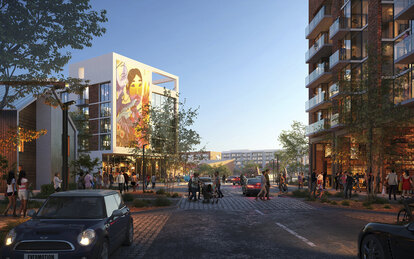
The unprecedented pace of urbanization in the 21st century has strained the capacity of cities and governments worldwide, raising an essential question: Will people be able to afford what it will cost to live in our increasingly urban future?
We are officially a quarter of the way into the Urban Century, with over half of the world’s population living in cities rather than rural areas for the first time in human history. It’s a trend projected to peak in 2080, when 85-90% of the world’s population could be living in cities.
In the U.S., many cities are facing a growing housing affordability crisis while they grapple with aging infrastructure and the intensifying extremes of climate change. In fact, in 2023 roughly one-third of all American households spent over 30 percent of their income on rent and mortgage payments, making them “housing cost burdened.” Bankrate’s latest report measured the widening gap between people’s earnings and home prices and found that over 75% of homes across the country are unaffordable for the typical household.
Despite attempts to downplay it politically, a sizeable majority of Americans from all socioeconomic backgrounds consistently rank housing affordability as a top concern. A recent nationwide survey showed nearly 3 in 4 Americans think housing affordability has worsened in their communities; close to half the respondents were moderately or extremely concerned about their own ability to afford housing.
In the face of these very real challenges, there are innovative solutions to build on. As planners, designers and citizens, we must rapidly and creatively rethink, adapt and improve our housing policies and housing infrastructure, putting systematic affordability at the forefront. By advancing people-centered and community-supported approaches where housing intersects with land use, transportation and resilience, we can start to close affordability gaps across the country.
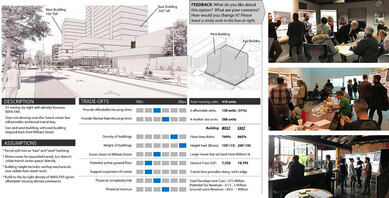
Extensive public engagement helped build community support for new affordable housing initiatives in downtown Ann Arbor, Michigan.
Build a Foundation of Community Support
In Ann Arbor, Michigan, residents typically agree there’s a shortage of affordable housing. However, like many communities, there is frequent opposition to locating it where it would benefit people the most.
Ann Arbor is consistently rated one of the most livable cities in America by publications like Forbes, U.S. News and World Report and Livability.com. It also has one of the nation’s highest income gaps. Despite a county-wide call for increased affordability and ambitious policy and zoning changes, fewer than 100 affordable units were built in Ann Arbor from 2015-2020.
To signal a committed civic shift, the city facilitated a series of hybrid engagement sessions in 2020 to address affordability with new housing on seven publicly owned, downtown surface parking lots. This community-driven, data-informed (and sometimes contentious) process led to the passing of a local tax to provide funding.
That engagement process and tax have produced tangible results. 2026 will see the opening of a new 90-unit, all-affordable mid-rise building in Kerrytown, and the groundbreaking for a 270-unit, all-electric, net zero high-rise over the downtown transit center. As Ann Arbor looks to increase housing density, sustainability and affordability citywide, these downtown wins highlight the importance of robust engagement to find values-driven solutions the community supports.
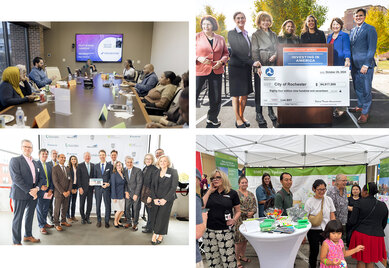
Public-private planning and investment partnerships are shaping a future for Rochester, MN that makes affordable housing an integrated part of the city’s economic development plans. Photos: Destination Medical Center (DMC) Economic Development Agency
Develop Dynamic Partnerships
There’s no effective way to meet affordable housing needs one project at a time. Cities need a targeted plan linked to a larger community development strategy, leveraging the power of public-private partnerships (P3) to fund and advance multiple goals.
Rochester, Minnesota is halfway through a unique 20-year partnership between the renowned Mayo Clinic, the State of Minnesota and Olmsted County to transform the city into a global destination for health and wellness. Mayo’s $5 billion Bold. Forward. Unbound initiative will be the largest private investment in state history, improving over 30 downtown blocks.
Efforts have already delivered 400,000 SF of new research and innovation space, the redevelopment of 15 downtown blocks, and $1.6 billion in new state and local tax revenue. There has also been a 100% increase in the amount of downtown housing, primarily located near a new bus rapid transit connection.

The city’s 2015 Destination Medical Center (DMC) Plan forecasted demand for 2,850 new residential units by 2035, with almost 1,600 added so far.
Graphic courtesy of Destination Medical Center (DMC) Economic Development Agency
Building on this momentum, the DMC plan’s five-year update prioritizes affordable housing options to meet the needs of all residents, including students, seniors and working families. It’s an inclusive future vision that prioritizes residential wellness in parallel with leadership in healthcare delivery.
Craft Policy That Prioritizes Affordability
Zoning and development policies that favor single-family residential, restrict density or allow developers to pay a fine in lieu of providing affordable units have all played a role in the U.S. housing crisis. Attempts to change these policies are frequently met with resistance fueled by NIMBYism.
The gap between housing policy and affordability has been particularly pronounced in San Francisco. Affordability woes and growing climate vulnerabilities have led to the city being ranked as one the riskiest housing markets in the nation. The current mayoral administration is attempting to face these challenges head-on, with a “principled, transparent framework to build more affordable and market-rate housing.”
The city’s Board of Supervisors recently approved an ambitious set of rezoning ordinances that could add tens of thousands of housing units to the city. This Family Zoning Plan leverages upzoning to allow taller and more dense buildings along transit and commercial corridors, primarily in the city’s western and northern neighborhoods. Per state law, this additional density requires mixed-income housing to receive state funding.
While a huge win for housing advocates, residents, planners and designers must continue to work together to ensure housing is developed in more equitable and resilient ways, with anti-displacement, long-term affordability and sustainable cost of living as core metrics for success.
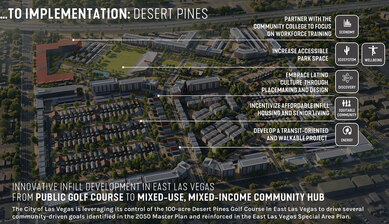
Dester Pines exemplifies how Las Vegas’ plans for the future of the city and its neighborhoods aim to integrate affordable housing goals with resilience and livability benefits like culturally responsive design, educational support, and walkable access to green space and mass transit.
Plan Holistically for Improved Resilience and Livability
While affordability is critical, it doesn’t always create a place that people can call home. To enhance livability and quality of life, we need citywide planning frameworks that prioritize a holistic range of community benefits for housing development.
The 2050 Plan for the City of Las Vegas anticipates 300,000 new residents over the next 25 years, with the regional population growing from 2 to 3 million. Knowing it faces a hotter, drier future, the city already has some of the most ambitious water conservation strategies in the world. Now it’s advancing radically new land use policies that prioritize resilience and transportation to reduce water demand while the city grows.
With research by the Las Vegas Valley Water District showing mid-rise, multi-family units as the most efficient for water use, the city’s future plans prioritize these much-needed housing types. It’s an approach that also addresses housing needs for the city’s current residents and neighborhoods, creating 16 distinct subareas for implementation of citywide planning goals.
This citywide vision is reflected in the Desert Pines development in East Las Vegas, a P3 that is currently under construction. The result of extensive bilingual community engagement, it’s a great example of the multiple benefits that can be realized when development is planned with current residents and is guided by a thoughtful framework for inclusive future growth.
While the challenges posed by our housing crisis won’t get any easier to solve, cities are finding new ways to respond and move forward. I am inspired every day by what politicians, city staff, developers, philanthropies and designers are achieving together by putting human needs at the forefront of our approach to housing and community development. It offers us the potential to make housing more affordable and more broadly beneficial for residents of the urban century.