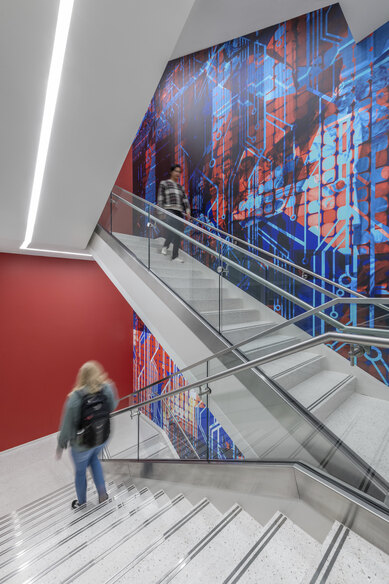
Southern Methodist University, Gerald J. Ford Hall for Research and Innovation
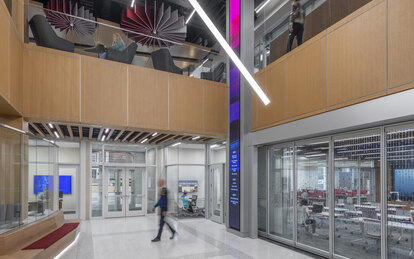
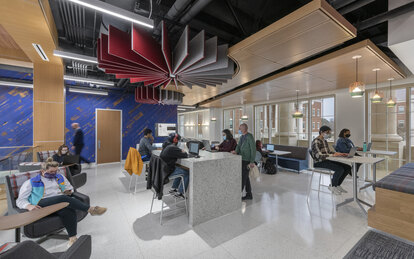
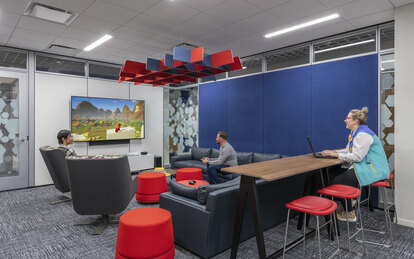
A hyper-adaptable, dynamic and technologically rich facility is designed to serve the diverse needs of the interdisciplinary Ford Hall for Research and Innovation.
Client
Southern Methodist University
Location
Dallas, Texas
Markets/Services
Architecture, Higher Education, Interiors, MEP Engineering, Professional Education, STEM (Science, Technology, Engineering, Math)
Size
42,000 GSF
Southern Methodist University (SMU) envisioned a facility that could bring together University researchers and the private sector for interdisciplinary research endeavors focusing on SMU’s strengths including data science, earth research, and gaming development programs.
The Ford Hall for Research and Innovation is designed specifically for research collaboration, able to flex based on research groups’ diverse needs and varying sizes. It is home to the AT&T Center for Virtualization (an R&D lab) and the Dedman College Interdisciplinary Institute. A hub for all graduate and doctoral students, the center also provides group learning and lab space for Guildhall, a nationally recognized graduate program for digital game development and research.
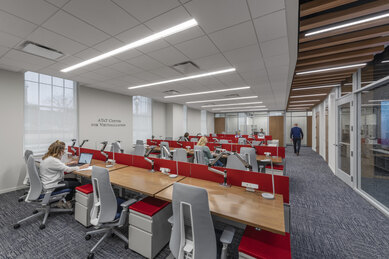
While its formal Georgian-style exterior complements the context of the SMU campus, the interior of the Ford Hall is purposefully modern, bold and high energy. From the main entrance, a large terrazzo foyer lobby leads to the state-of-the-art Visualization Lab, with fully integrated, wall-to-wall touch screens. Strategically located between the AT&T Center and the Dedman Institute, the “Viz Lab” is the hub of product demonstration and testing. Just outside the lab, a three-story-high digital ribbon screen showcases projects and research occurring in the building.
The other half of the first floor, as well as most of the second and third floors, are designed as highly flexible spaces, utilizing a system of demountable wall components and a raised floor that houses all electrical and data connections. Ninety percent of the walls in the building can be added and removed in various configurations to suit research and collaboration needs. As an example, the building can accommodate 15 researchers working together or 30 researchers working in small groups or on their own. Thoughtful planning of mechanical systems are integrated into the flexible strategy and right-sized for all potential configurations.
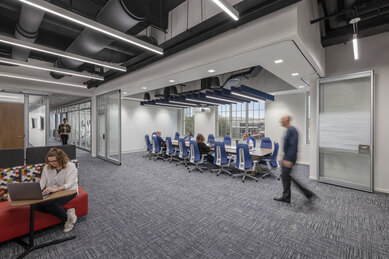
Guildhall, a nationally recognized graduate program for digital game development and research is a significant user of the building. As students move through the two-year program, the building adapts to each semester’s curriculum. Students start by working in teams of four or eight in small, private studios. As they advance, they progress to larger groups and larger spaces, eventually moving up (literally and figuratively) to the largest studios on the third floor. A playbook for the building staff details the configurations needed for each semester of the curriculum. In the past, spaces that no longer suited the current curriculum sat vacant; the demountable wall systems mean all spaces are used all the time—a more efficient and sustainable model.
The first building of its type at SMU, the Ford Hall is a visionary example of how the university can foster collaboration, adapt to advancing technology and better implement flexible space configurations.