From STEM to STEAM: How Interdisciplinary Design Drives Student Success
Key Takeaways:
Higher Education institutions are expanding from STEM to STEAM, creating learning environments that foster creativity, innovation and collaboration.
Successful STEAM education facilities are intentionally designed to connect people and ideas through interdisciplinary collaboration, applied learning, visually connected learning environments and shared community hubs.
Future-ready STEAM buildings adapt to changing technologies and teaching methods while supporting student engagement, belonging and success.
The expansion from STEM to STEAM learning environments marks a significant evolution in higher education design. STEM refers to science, technology, engineering and mathematics, while STEAM adds the arts and design to that foundation. This reflects a broader strategy of career readiness, one in which technical expertise is paired with purpose, creativity and iterative experimentation that is expected in today’s workforce. To support this, institutions are commissioning new designs fostering connected ecosystems that encourage collaboration, creative expression and interdisciplinary innovation.
The most effective STEAM buildings do more than house academic departments. They create environments where knowledge can be shared, questioned and developed together, fostering interdisciplinary innovation and a strong sense of academic community. Their design should make collaboration visible, locate shared resources along natural circulation paths and provide a range of spaces for different ways of working, from focused laboratories to open commons and art studios.
The following four design considerations help create STEAM spaces that inspire learning, encourage innovation and enhance student success.
Design for the Space Between Disciplines
A STEAM facility reimagines the spaces between disciplines as opportunities for learning, collaboration and discovery. Rather than designing for a single department, the building is designed to foster interactions between diverse areas of study, exposing students to new ways of thinking while deepening expertise in their own areas of study. These connections encourage the exchange of ideas and help build the interdisciplinary fluency that increasingly defines STEAM education.
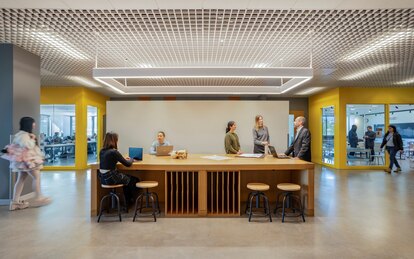
At Las Positas Community College's STEAM Building, collaboration spaces are intentionally positioned to encourage natural encounters among students and faculty from different disciplines. By creating opportunities for both planned and spontaneous interaction, the building supports a culture of shared learning and discovery while strengthening the broader academic community.
Applied Learning on Display Inspires Innovation
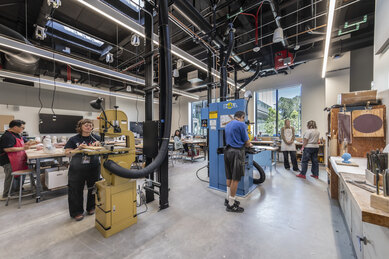
Evolving STEAM curriculum emphasizes applied learning to advance the understanding of technical concepts. This results in more active, hands-on environments where students can prototype, test, build and learn from one another, often across disciplines. By emphasizing participation over observation, these spaces encourage experimentation, collaboration and creative problem-solving. Successful applied teaching spaces combine accessibility, flexibility and the infrastructure needed to support a wide range of activities while remaining visually connected to the broader life of the building through transparency and openness.
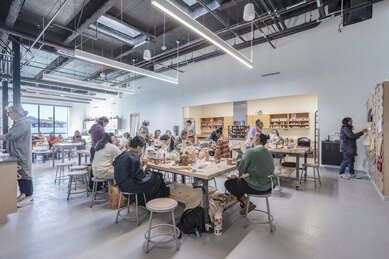
At City College of San Francisco's STEAM Building, 3D visual arts studios are positioned along major circulation routes, making the process of creating and learning visible to the campus community. Similarly, the Las Positas College STEAM design locates photography, digital arts studios and display areas on the ground level along the main entry corridor. This visibility invites participation, sparks curiosity and reinforces a culture of innovation. A well-designed applied learning environment communicates that experimentation is encouraged, support is readily available and every student has the opportunity to succeed.
"Passing by different classrooms, it's easy to see the diverse exploration of science and art. You feel the invitation and sense of belonging."
- Sarah Rodriguez (Architecture Major, CCSF)
"The design makes it easier to see and talk to students about their majors. The spaces challenge me to try new things that I've never done before."
- Chukwunechelum Okeke (Computer Science Major, CCSF)
Foster Belonging Through Visible Learning
In a STEAM building, transparency, shared circulation and exhibition spaces make learning visible and part of daily campus life. By exposing students to work across disciplines, these spaces encourage curiosity, collaboration and a stronger sense of belonging.
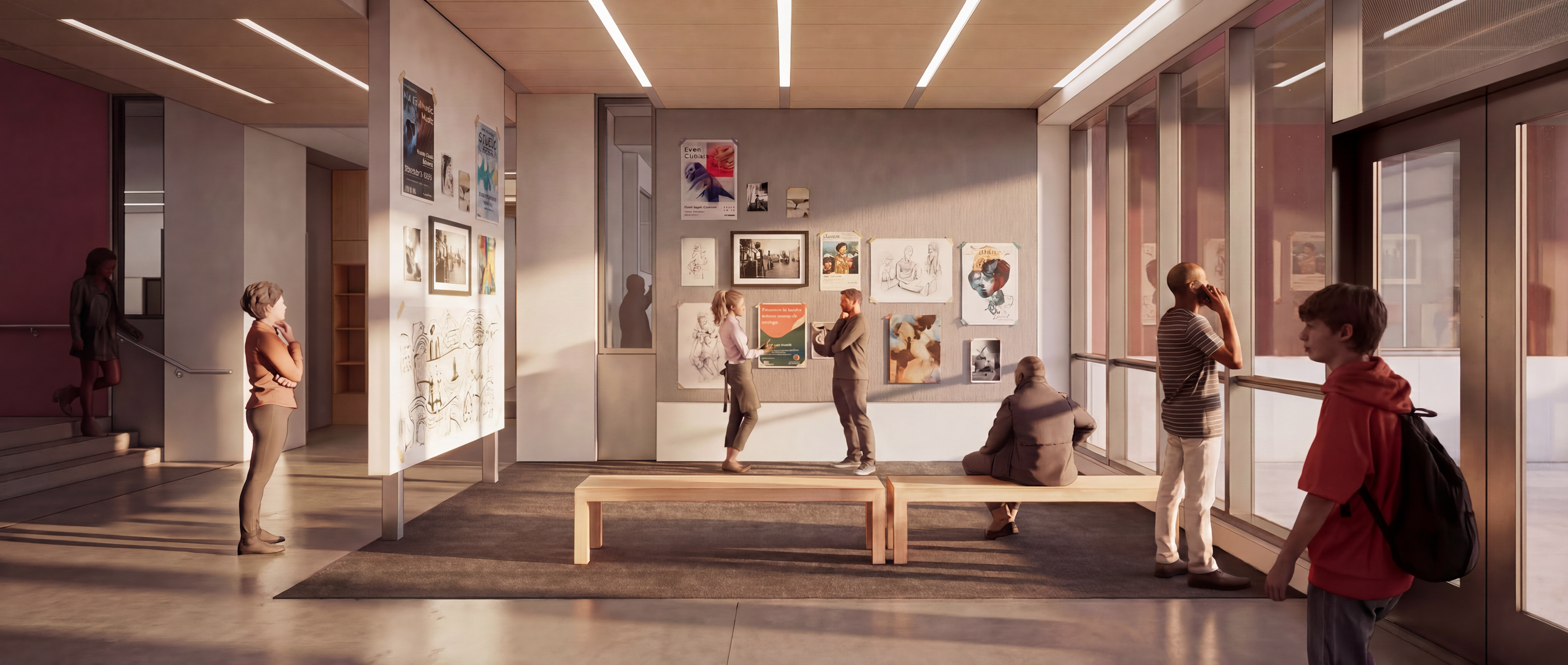
At Las Positas College and CCSF STEAM, public display areas are designed to showcase both completed and in-progress work, helping students connect ideas across disciplines and see themselves as contributors to the academic community. This visibility also supports persistence by creating more opportunities for interaction and mentorship.
Visibility should be intentional. Strategic windows, framed views and display areas can reveal the learning process while maintaining functional needs. The goal is not transparency for its own sake, but to create moments of discovery, connection and belonging throughout the building.
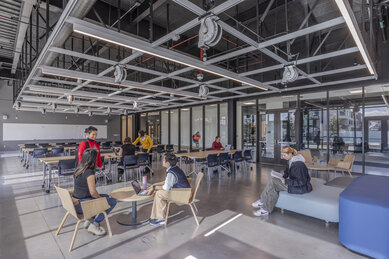
"The openness of this building allows me to have better connections with my students, which is very important to supporting their success."
- Joe Reyes (Department Chair of Biological Sciences, CCSF)
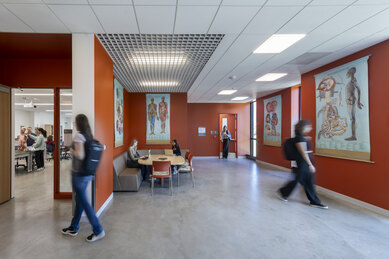
"The connectivity of spaces have dramatically changed our lives; faculty, staff and students. We see students more engaged everyday and THAT is so fulfilling."
- Stephanie Robison (Art Department Chair, CCSF)
Plan Specialized Programs Around Shared Spaces
Successful STEAM education facilities must accommodate programs with fundamentally different cultures, equipment and environmental requirements. Science laboratories require robust ventilation, controlled lighting and strict safety protocols, while visual arts studios thrive on openness, flexibility and adaptability. The challenge is not to make every space flexible, but to strategically organize specialized environments so they can benefit from shared resources and opportunities for collaboration.
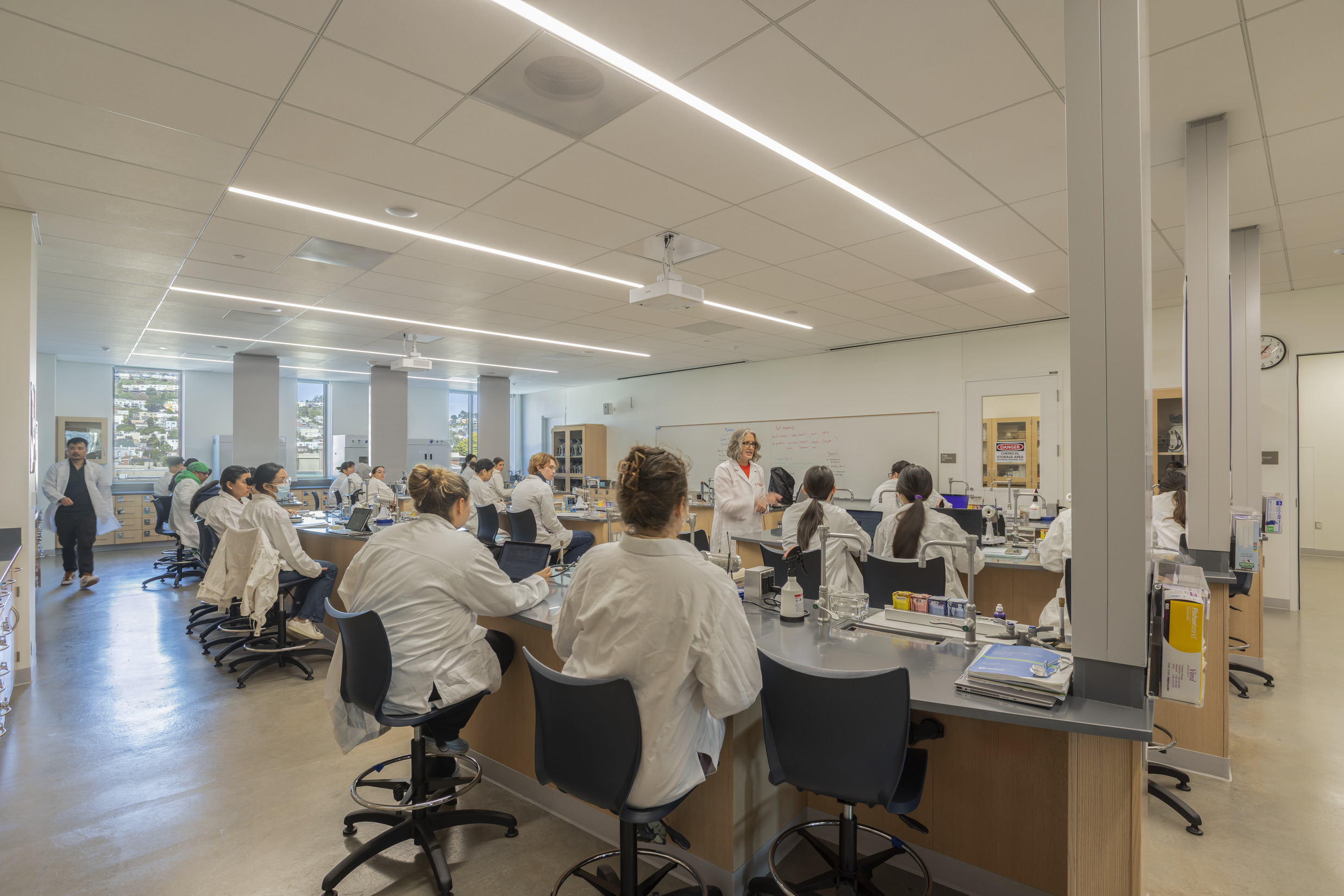
Effective adjacency planning places specialized programs around common support and collaboration areas, creating academic living rooms where learning can continue beyond scheduled classes. These shared spaces connect disciplines while preserving the distinct identity of each program, allowing students to feel both grounded in their field and connected to a larger STEAM community.
The Future of STEAM Learning Environments
The most enduring STEAM education facilities will be those that can adapt to evolving tools and pedagogies while continuing to foster a strong sense of belonging. Their success will be measured not only by technical performance but also by whether students encounter new perspectives, find support, take creative risks and see themselves as contributors. When buildings enable these experiences, they become more than places of education; they become active partners in the creation of knowledge.