The Science of Living Well: Translating Lessons from Research Labs to Senior Living
Luxury, hospitality and wellness have reshaped expectations for senior living. But as residents increasingly think not just about lifespan, but healthspan, another question is emerging:
How can the places we live support cognitive vitality as we age?
That question connects two areas of our practice that may seem unrelated: advanced research environments where scientists investigate the brain, behavior, cognition, movement, sleep and human performance, and senior living communities where people experience those same dimensions of human health every day.
The connection isn’t that a neuroscience building and a senior living community should look or function alike. They shouldn’t. It’s that designing both requires us to think deeply about how the environment shapes human experience: how people move, connect, orient themselves, recover, and engage with the world around them.
That perspective offers an opportunity. By bringing lessons from our research practice together with evidence around aging and cognitive health, we can ask better questions about the next generation of senior living.
Hospitality helped senior living feel more like home. Luxury changed expectations around the daily experience. Wellness made it more active. These expectations still matter, but supporting a longer, healthier life calls us to look beyond amenities alone and consider how the environment can create opportunities for purpose, agency, movement, social connection and cognitive engagement.
Research reinforces the importance of those relationships. Studies have associated social activity with later cognitive functioning and explored the interconnected roles of social participation and physical activity in healthy aging.
We believe the opportunity is research-informed living: bringing together what science tells us about aging, what we learn from designing environments for scientific discovery, and what we know about creating places older adults genuinely want to call home.
This does not mean turning homes into laboratories. Instead, it asks how the physical environment can make healthy behaviors, meaningful interaction, and everyday engagement easier to support.
A Different Perspective: Designing for Researchers and Residents
SmithGroup designs advanced research environments for institutions including Yale, UCSF, Caltech, UPenn, and USC, where scientists study the brain, behavior, cognition, movement, perception, sleep, and human performance. We also design senior living communities where many of those same dimensions of human health are experienced every day.
That gives us a unique vantage point.
Our research environments challenge us to think deliberately about the spatial conditions that support focus and collaboration, intuitive navigation, movement, sensory comfort, adaptability, and social interaction. At the same time, research into healthy aging continues to explore relationships among the built and social environment, physical activity, social engagement, and cognitive well-being.
The opportunity isn’t to copy a research building into senior living. It’s to translate what we learn across building types.
What can a “collision zone” designed to encourage interaction among researchers teach us about creating opportunities for residents to connect naturally? How might intuitive wayfinding strategies used in complex research environments inform navigation at home? How can circulation make movement an ordinary part of the day, rather than something confined to a scheduled fitness class?
At the UCSF Weill Institute for Neurosciences, for example, light-filled intersections bring researchers into shared circulation and create opportunities for spontaneous interaction. In senior living, the purpose is different, but the spatial lesson is relevant: architecture can make natural encounters more likely throughout the day.
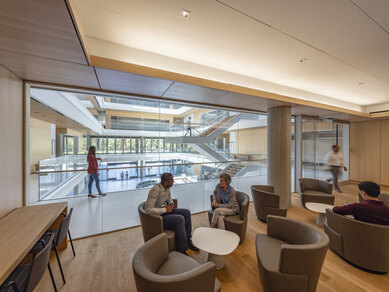
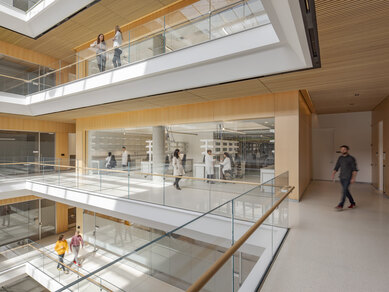
At the UCSF Joan & Sanford I. Weill Neurosciences Building, glass-walled "collision zones" create opportunities for spontaneous interaction among researchers. In senior living, that same spatial principle can inform environments where connection is visible and woven into everyday routines.
Across our research and senior living work, five principles emerge: connection, orientation, movement, restoration, and adaptability. Their applications may differ, but together they offer a framework for translating insights from environments designed for discovery into places designed for longevity.
1. Connection as Infrastructure
Loneliness and isolation are significant concerns for older adults, but connection cannot depend solely on programming. The physical environment can create opportunities for interaction as part of everyday life.
At Yale’s Wu Tsai institute for BrainWorks, “sticky corridors” and “magnet spaces” create opportunities for researchers to cross paths, pause and connect. In senior living, that principle can help lower the threshold for social engagement.
Widened corridor nooks, seating at elevator lobbies, open activity rooms, interior glazing and social spaces along daily routes allow residents to see activity, pause, join, or simply feel part of what is happening around them.
Rather than expecting every meaningful interaction to happen through a scheduled event, architecture can create more opportunities for connection to occur naturally.
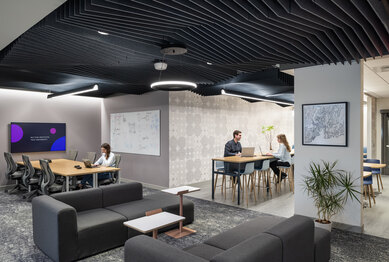
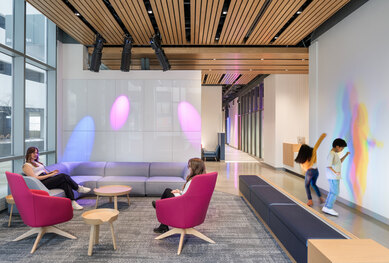
“Sticky corridors” and “magnet spaces” at Yale University’s Wu Tsai Institute for BrainWorks create opportunities for serendipitous connections among scientists. The same principle can inspire visible micro-destinations and natural overlaps that make everyday social interaction in senior living communities easier without forcing participation.
2. Cognitive Vitality: Designing for Intuition over Memory
Brain-supportive design shouldn’t look like “memory care branding.” It should feel like great hospitality: intuitive, calm, and confidence-building.
Complex research environments demonstrate the value of clear sightlines, recognizable destinations and daylight in helping people navigate. In senior living, these principles can reduce reliance on memory and signage alone.
Distinctive elevator lobbies, memorable landmarks, windows at corridor ends and variations in art, color, or material can provide intuitive cues and points of orientation.
Good wayfinding can be experienced as much as it is read, allowing the architecture itself to help residents navigate daily life with greater confidence and independence.
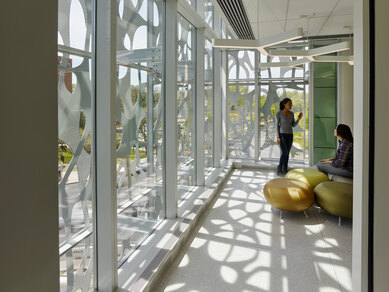
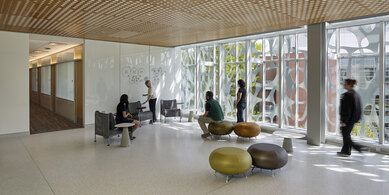
UPenn’s Neural and Behavioral Sciences Building uses daylight and clear sightlines to help people navigate a complex environment, principles that can inform intuitive landmarks and environmental cues that make orientation feel more natural in a senior living setting.
3. Movement Built into Architecture
Many senior living communities already have impressive fitness centers and exercise programs. The next opportunity is to consider movement across the rest of a resident’s day.
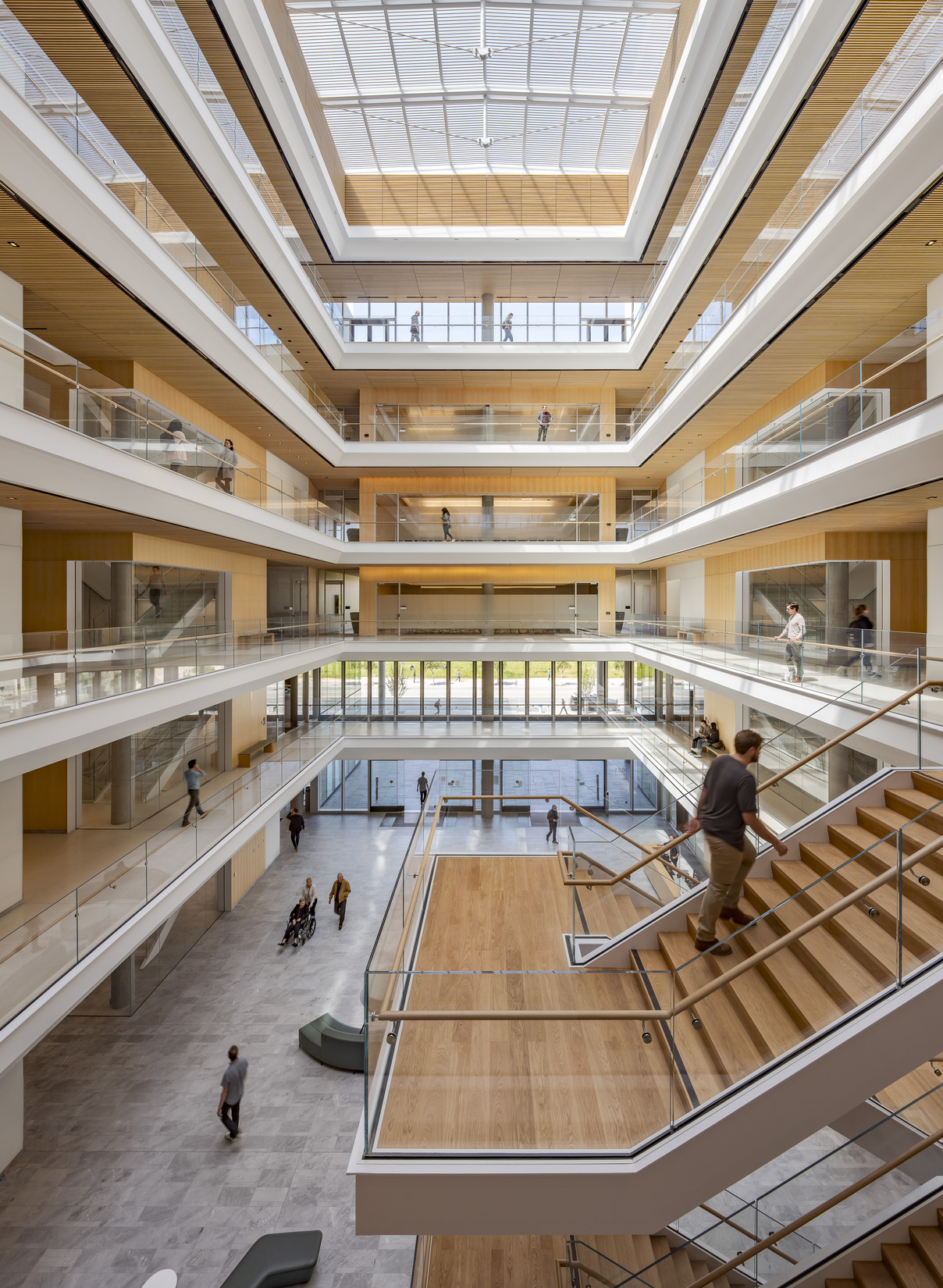
Research environments remind us that circulation isn’t simply about getting from point A to point B. When stairs are visible, destinations are thoughtfully distributed and routes offer daylight, views and reasons to pause, movement becomes part of everyday experiences.
In senior living, that could mean light-filled stairs, walking loops that connect meaningful destinations, places to pause and recover, and direct access to outdoor terraces and courtyards.
The goal isn’t to make residents walk farther for the sake of walking. It is to give movement purpose. A trip to get coffee, visit a neighbor, tend a garden, or sit beside a sunny window can become a small invitation to move.
4. The Invisible Amenities: Light, Sound and Restoration
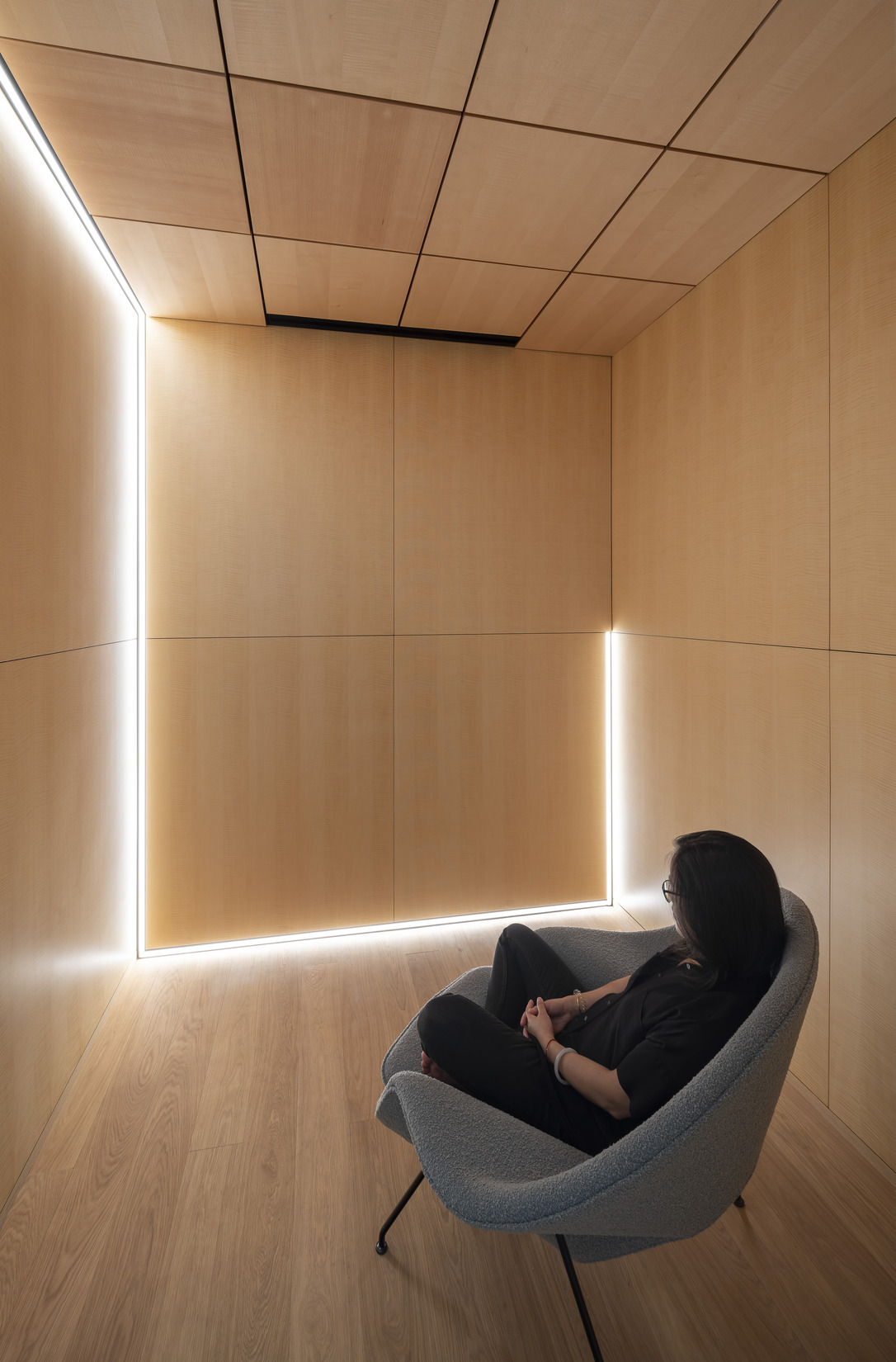
Some of the most important qualities of an environment are also among the least visible: daylight, glare, control, acoustic comfort, sensory stimulation and access to nature.
Research environments concerned with sleep, perception, and human performance reinforce the importance of considering these conditions deliberately. In senior living, the question becomes: How can the sensory environment make everyday life feel more comfortable and restorative?
That could mean access to daylight, reduced glare, thoughtful transitions from daytime to evening lighting, and less reverberation and background noise, particularly in dining and social settings.
A quieter dining room can make conversation more comfortable. A corridor with controlled glare can feel more comfortable to navigate. Daylight and views can provide connections to the outdoors and time of day.
This layer of design can be difficult to see, but it is deeply felt.
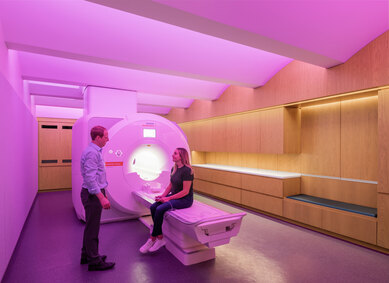
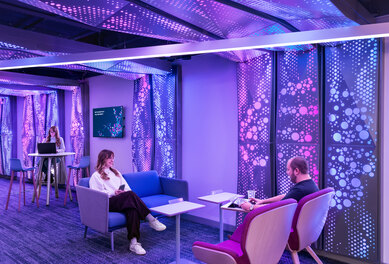
Dynamic lighting strategies at Yale University’s Wu Tsai Institute illustrate the attention research environments give to light throughout the day. In senior living, that same attention can inform environments that balance daylight, glare and visual comfort from morning through evening.
5. Futureproofing for Health: Technology That Still Feels Like Home
The next generation of senior living also has to anticipate change. Telehealth, wearables, remote monitoring, emerging therapies and new approaches to wellness may influence how services are delivered. Yet residents still want home to feel like home, not a clinical environment.
Research environments face a related design challenge: they must accommodate tools, equipment, and methods that will change throughout the life of a building. The lesson for senior living isn’t to replicate laboratory infrastructure. It is to think further ahead.
Could health and wellness spaces evolve as services change? Can they accommodate telehealth or cognitive screening without feeling clinical? Can infrastructure prepare for technologies that don’t yet exist without allowing technology to dominate the experience today?
Hospitality-forward health hubs and adaptable wellness environments can support future innovations while remaining warm, dignified, and residential.
The best future-ready building doesn’t need to look futuristic. It simply needs to be ready for what comes next.
The Next Generation for Longevity
Hospitality and wellness are now expected in senior living. The next opportunity is to build on them with a deeper understanding of how the environment can support people throughout a longer life.
Our work spans environments dedicated to studying human health and behavior and communities where people experience those human needs every day. Bringing those perspectives together allows us to connect three sources of insight: what science tells us, what designing for research and discovery teaches us, and what we know about designing places older adults genuinely want to call home.
Research-informed living isn’t a prescriptive aesthetic or another amenity package. It is a way of asking better questions: How can a building make connections easier? Navigation more intuitive? Movement more natural? How can it provide both stimulation and restoration while continuing to adapt as our understanding of healthy aging evolves?
The next generation of senior living can still feel luxurious and deliver extraordinary hospitality. Above all, it should still feel like home. But beneath that experience can be a deeper layer of intention, informed by what we continue to learn about how people connect, move, orient themselves, recover and engage throughout their lives.
From research labs to longevity living, the opportunity isn’t to make home feel more like science. It’s to let what we’re learning through science help us design a better place to call home.