Virginia Museum of Fine Arts Expansion and Renovation
A museum expansion repositions one of our nation’s premier art institutions as a welcoming beacon to its community.
Client
Virginia Museum of Fine Arts
Location
Richmond, Virginia
Markets/Services
Cultural, Museums, Architecture, Interiors, Lighting Design, MEP Engineering, Fire Protection and Life Safety Engineering
Size
Expansion: 173,000 square feet
Renovation: 45,000 square feet
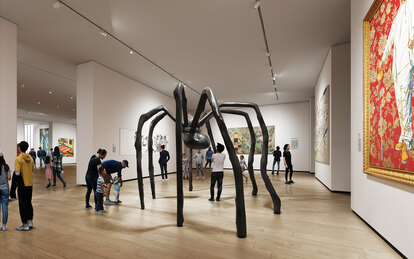
In the heart of Richmond’s Museum District, the Virginia Museum of Fine Arts is one of the largest art institutions in North America. Owned and operated by the Commonwealth of Virginia, and free to the public, its encyclopedic collection spans continents, media and eras – from the largest collection of Fabergé eggs outside of Russia, contemporary African Art and Egyptian antiquities, to a rapidly growing archive of photography and works on paper. When a series of significant acquisitions and a 2010 building expansion nearly doubled the museum’s collection, space, and annual attendance, the VMFA engaged SmithGroup to capitalize on its new institutional trajectory. Guided by VMFA’s new strategic plan, SmithGroup was tasked with improving gallery sequencing, visitor circulation, and collections care, and transforming the building to better reflect the institution’s aspirations for community connection.
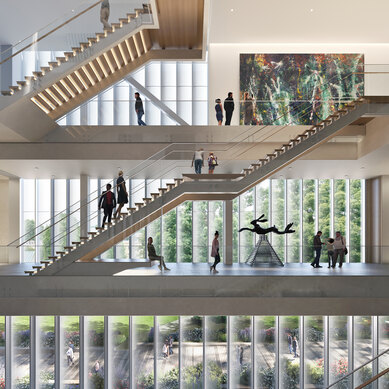
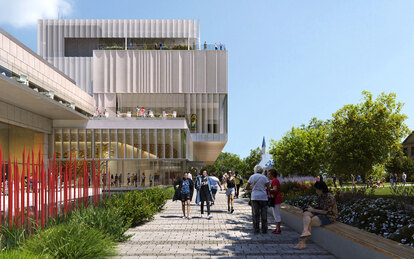
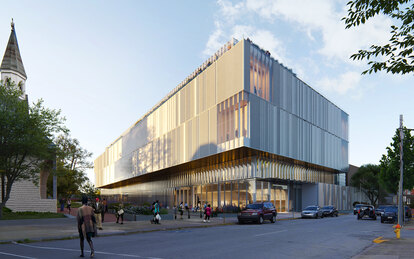
The design of the expansion thoughtfully connects the existing structure and re-establishes intuitive visitors circulation that had been disrupted by prior additions. Curved high-performance glass blends the museum's interior and its surroundings.
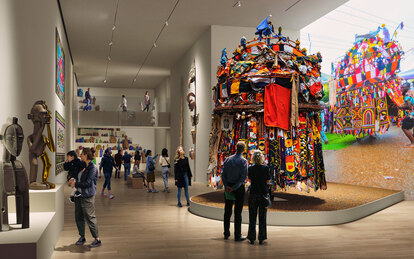
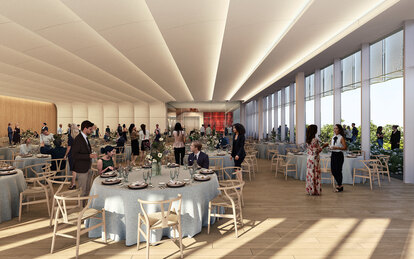
Following several months of engagement with internal stakeholders, current visitors and members of the community who had never visited, the SmithGroup team gave shape to the priorities of the VMFA strategic plan. A resulting program for the new 173,000-square-foot expansion, augmented by 45,000-square-feet of renovation, expands galleries and special exhibitions space, creates a new works-on-paper storage and conservation center, introduces a revenue-generating event space, and consolidates formerly siloed departmental staff into a collaborative daylit office suite.
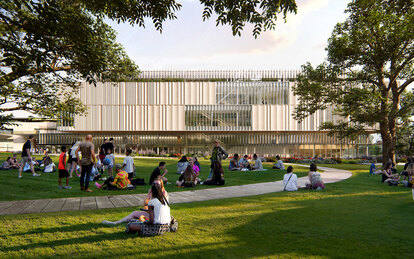
Building upon the validated program, the design team set about solving other spatial and experiential challenges faced by VMFA while creatively navigating layers of regulatory and site constraints. Six previous additions to the original 1930s building had complicated wayfinding and resulted in an inward-facing building closed off from its surroundings, particularly its much-loved Sculpture Garden. The new design thoughtfully connects to the existing structure by re-establishing intuitive visitor circulation corridors that had been disrupted by prior additions. It also transforms the formerly oppressive and windowless Sculpture Garden façade into a transparent and welcoming threshold to the VMFA experience, activated by a food amenity and views to art from inside and out.
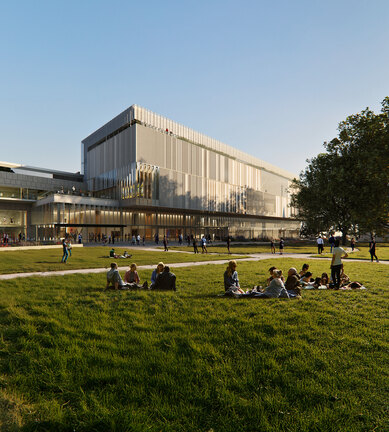
The museum's existing architectural styles of classicism and post modernism are reinterpreted and transformed in a new expression where traditional fluted elements associated with monumental and institutional architecture become a macro texture of solid and transparent scalloped panels.
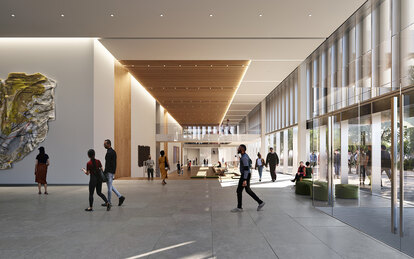
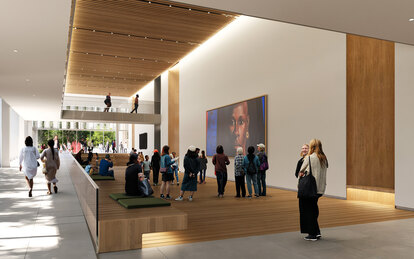
It was clear in conversations with community members that the aesthetic language of the expansion would be just as critical as the programmatic and functional features. The architectural modes of classicism and post modernism in other wings of the museum felt unwelcoming or even hostile to some residents. SmithGroup’s designers elected to respond with a new expression, reinterpreting and transforming the traditional fluted elements associated with monumental and institutional architecture into a macro texture of solid and transparent scalloped panels. Gently curved high-performance glass reconnects the Commonwealth’s museum to its surroundings, and blends seamlessly with fluted concrete to create a human-scaled softness to the exterior. Echoes of this macro-fluted motif are repeated in the warm wood-paneled niches and ceiling in the interior gathering space that serves as a transition between the transparent west façade and the opaque galleries within, allowing the museum to project an inviting glow where it was once dark and imposing. In addition, the nexus of the expansion, a multi-story atrium with vertical circulation continues the connection between inside and out, acting as a beacon to the surrounding community.
The Virginia Museum of Fine Arts is a museum that has changed with the times to become one of the most respected institutions of its kind. Through this thoughtful expansion and renovation, the VMFA is ready to tell a bigger, broader, more representative story, for and about the people of Virginia, and the world.