West Park, Carmel Clay Parks & Recreation
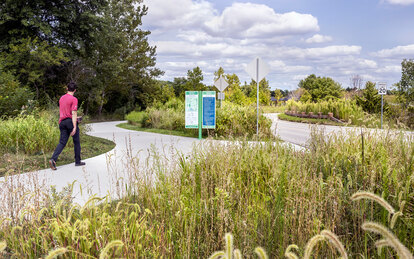
A 40-acre expansion to a flagship regional park engages all ages in a seamless setting of native landscapes and green infrastructure.
Client
Carmel-Clay Parks and Recreation System
Location
Carmel, Indiana
Markets/Services
Cities, Community & Regional Parks, Parks & Open Spaces, Urban Parks & Public Spaces, Natural Systems & Habitats, Urban Planning, Landscape Architecture, Sustainable Design, Green Infrastructure, Civil Engineering, Architecture, Structural Engineering, Energy & Environmental Modeling
Size
120 acres with 40-acre addition
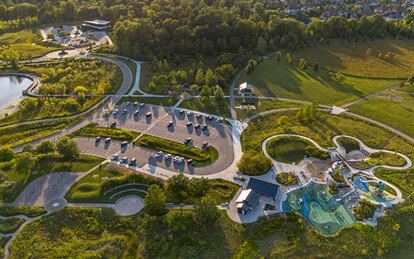
With the area’s population more than doubling in the last 20 years, Carmel Clay Parks & Recreation recognized the need to upgrade West Park, a highly popular regional park and important community asset. Their updated master plan identified 40 acres to activate with new amenities and improvements. The site’s high water table and grade changes presented challenges that also provided intriguing design opportunities.
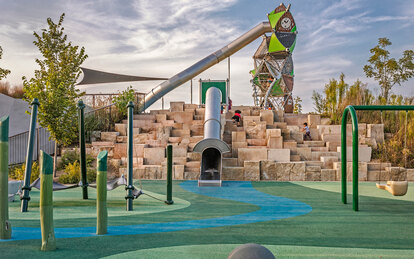
SmithGroup’s design team sought the input of local schoolchildren and their parents, which significantly shaped the final project. Rather than separate playground and water play areas, children inspired the design of Jim Engledow Commons, where dry and wet play features intertwine on multiple levels. The Groves features an adventure play area in a woodland setting, a program pavilion and sustainable strategies on display. Multi-use trails connect the expansion to existing park and regional trail networks, and the landscape design employs native plantings in harmony with the existing park landscape.
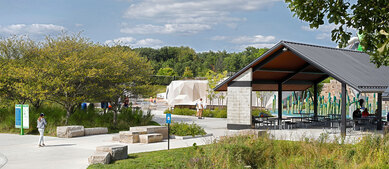
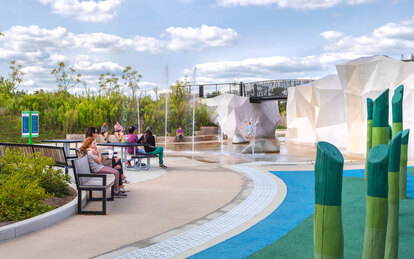
Jim Engledow Commons is the centerpiece of the park, punctuated by a sixteen-foot earthen ridge that anchors both the land and water play experiences. Using poured-in-place play surfaces and winding concrete paths, it blends playgrounds, water play features and natural landscapes, creating a canyon oasis that mimics a flowing creek through a prairie hillside. Canyon waterfalls and spray nozzles highlight the water play area, spanned by a pedestrian bridge that links the upper and lower Commons. A “parent perch” provides a zone where caregivers can interact while viewing children in both areas. The seating that overlooked the park’s former “lazy river” are now part of a living outdoor classroom featuring green infrastructure demonstration areas.
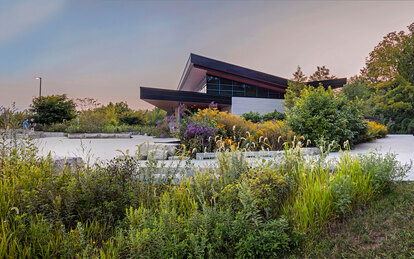
The Groves adds a new adventure play area that complements the surrounding woodland environment. It is anchored by the Jill Perelman Pavilion, a multi-purpose education, recreation and community center with plazas and seating areas made from locally sourced limestone and providing flexible open spaces that merge with the native landscape.
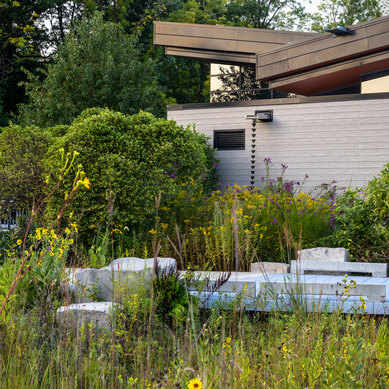
The Pavilion's design captures all roof and site stormwater, directing it through a series of rain gardens, stormwater planters and bioswales before releasing it to onsite wetlands and ponds.
Carmel’s reimagined West Park adds valuable new areas of play, education and environmental protection, creating a more connected, cohesive and captivating visitor experience. It enhances a beloved park for its residents and helps educate the next generation of environmental stewards. For a community already recognized as a national leader in civic parks and livability, West Park further raises its reputation and establishes a new standard for sustainable park development.