Fire Protection for Museum Collections: A Practical Roadmap for Conservators
Fire remains one of the most significant threats facing museums, archives, and cultural heritage institutions. Beyond threats to buildings and human life, fire can irreversibly damage or destroy irreplaceable collections in minutes. For museum collections managers and conservators, safeguarding collections from fire is a core responsibility tied directly to preservation ethics and long‑term stewardship.
Designing a code-compliant and well-protected collections storage space is complex. Museums house a wide range of materials, with multiple storage formats, and environmental conditions that rarely fit neatly into generic building code assumptions. As a result, successful protection strategies depend on early planning, informed decision‑making, and collaboration with professionals who understand both fire dynamics and collection-specific risks. Fire protection engineers (FPEs) with specialized experience in designing for museums and collections guide cultural institutions in the design process.
Understanding What Is Being Stored—and How
Effective fire protection begins with a thorough understanding of the collection itself: what media are stored, how they are stored, and where they are located.
Museum collections may include a combination of combustible and noncombustible materials, often in close proximity. Many institutions also store hazardous materials as part of their collections, such as nitrate film or biological specimens preserved in alcohol or other hazardous chemicals.
These materials often trigger additional code requirements related to hazardous materials storage, ventilation, spill control, and fire‑rated separation. Proper compartmentalization is frequently required and must be carefully integrated without compromising operational workflows.
Cool and cold storage introduce added challenges for sprinkler performance, detection reliability, and piping materials, all of which must be addressed during system design. Photographic prints, negatives, and motion picture film are often stored in cool or cold conditions to increase their longevity.
Experienced FPEs help institutions evaluate these risks holistically rather than relying on generalized assumptions that may lead to an underperforming fire protection system or unnecessary over‑design of the collections storage.
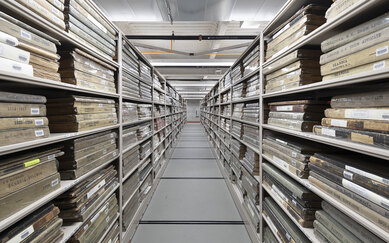
Assessing storage containers is crucial to effectively designing fire protection systems for collections storage. Here, paper artifacts are stored wrapped in plastic, an additional potential fire risk.
Storage Containers: An Often‑Overlooked Factor
The containers used to house objects also significantly influence fire behavior. Modern collections increasingly rely on a mix of containers, including:
- Plastic bags and enclosures
- Corrugated cardboard cartons
- Wooden boxes or crates
Each of these contributes differently to fire load, smoke production, and fire spread. For example, certain plastics may melt and drip, accelerating fire growth, while corrugated cartons can significantly increase combustibility in high-density storage. These factors affect sprinkler design, detection placement, and the amount of suppressant needed to effectively fight a fire.
Fire protection engineers should assess container materials as part of the overall hazard classification, ensuring that system performance aligns with real-world storage conditions.
Storage Configurations and Their Fire Implications
How collections are arranged spatially has a direct impact on fire protection requirements. Common museum storage configurations include:
- Solid shelving systems
- Open rack storage (single, double, or multiple row)
- Palletized storage using wood or plastic pallets
- High‑piled storage
- Mezzanine storage
Each configuration influences fire growth potential, heat release rates, and sprinkler discharge patterns. High‑piled storage and rack arrangements often trigger more stringent sprinkler criteria than standard shelving. Utilizing rack storage could introduce the need for in-rack sprinklers, depending on the configuration. Mezzanines, while space‑efficient, may require additional sprinklers beneath the walking surface to prevent concealed fire spread from media below.
In addition, as storage heights increase, so do the fuel load and risk of vertical fire spread, which directly affects the density of suppressants needed to protect the stored media. An experienced FPE can evaluate whether proposed configurations remain within acceptable limits or if enhanced suppression or detection strategies are necessary.
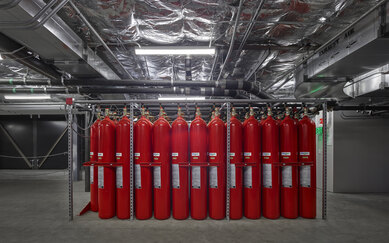
Multiple clean agents are available for protection of critical collections. Here one is used to protect a film vault facility.
Fire Suppression System Options: Matching Systems to Collections
A range of fire suppression technologies are available for museums, each with distinct advantages and limitations. Choosing a system is not about simply lowering the risk of fire, but about balancing fire control effectiveness, reliability, operational risk, and conservation priorities.
Wet Pipe Sprinkler Systems
Wet pipe systems are increasingly popular in museum collections storage spaces due to their cost effectiveness, simple maintenance, and ability to control fires early. Smithsonian Institution, for example, implements wet pipe sprinkler systems in most of their museums to protect their collections.
Dry Pipe Sprinkler Systems
Dry pipe systems keep pipes free of water until activation, alleviating concerns about freezing or accidental discharge. However, dry pipe systems are more complex, slower to respond to a fire, and susceptible to corrosion and pinhole leaks if moisture becomes trapped. Nitrogen inerting can reduce these risks, but requires a nitrogen generation system, which increases complexity and cost.
Preaction Systems
Preaction systems also keep pipes dry until system activation but add layer of a detection system before water is released. Detection can be by traditional spot type smoke detectors or air sampling smoke detectors when early-stage fire detection is critical.
While often favored for collections environments, preaction systems demand careful design, commissioning, and ongoing testing to ensure reliability. Preaction systems require more complex maintenance and higher installation costs.
Water Mist Systems
Water mist systems use fine droplets to suppress fires while minimizing water usage. They offer faster heat reduction and reduce secondary water damage but are specialized systems with higher installation and maintenance costs.
Clean Agent Systems
Clean agent systems suppress fires without water, using special chemicals that leave no residue, making them attractive for sensitive materials. However, they are costly, less effective in large or open spaces, require costly recharging after discharge, and are subject to evolving environmental regulations.
An experienced FPE will understand the tradeoffs and will recommend systems based on collection sensitivity, room geometry, operational constraints, and long‑term maintenance realities—rather than defaulting to one-size-fits-all solutions.
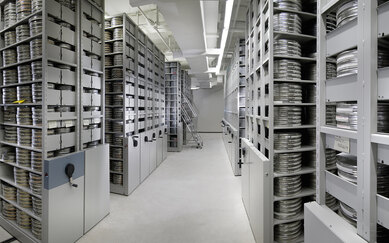
The configuration of storage also affects the fire risk involved. Racks increase vertical loading, in turn requiring stricter fire protection measures.
Why Fire Protection Engineers with Museum Experience Matter
Fire protection for museum collections requires designing an integrated, code‑compliant strategy that respects the uniqueness of each collection and facility. Experienced FPEs with specialized understanding of museum and collections environments bridge the gap between conservators, collections staff, architects, authorities having jurisdiction, and system installers—helping institutions avoid costly redesigns, approval delays, and unintended consequences that compromise collections or operations.
Designing fire protection systems should be a collaborative, expertise‑driven process between FPEs and museum collections staff to ensure resilient solutions that protect both collections and institutional mission for years to come.
Contemplating a building project for your cultural institution? SmithGroup's new book Building a Museum: This is Not a Manual demystifies planning, designing and constructing a museum capital project.