Where Preservation Meets Protection: Fire Safety Design for Museums in Historic and Existing Buildings
Key fire protection considerations for museums planning upgrades, renovations, or ongoing operations in existing or historic buildings, and the value of early collaborative planning
Key Takeaways for Museum Professionals
- Fire protection engineering in museums extends beyond code compliance to support preservation, operations, and the visitor experience.
- Historic and existing buildings often require flexible, performance‑based fire protection solutions supported by early engagement with authorities having jurisdiction (AHJs).
- Temporary exhibits necessitate proactive coordination to address changing fire risks and egress conditions.
- Early involvement of fire protection engineers reduces risk, cost, and disruption later in the project.
- Fire suppression and detection strategies should reflect artifact sensitivity, environmental conditions, and long‑term operational needs.
Museums in existing or historic buildings face a distinct challenge: protecting visitors, staff, collections, and irreplaceable architecture while respecting preservation constraints and curatorial intent. Fire protection, fire alarm, and life safety systems are often viewed as code driven necessities. When thoughtfully designed, however, these systems can actively reinforce a museum’s mission, safeguard collections, and enhance long‑term resilience without compromising architectural character or the visitor experience.
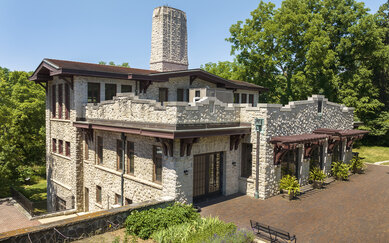
The Reality of Fire Safety in Historic and Existing Museums
Many museum buildings were never designed to accommodate modern fire protection infrastructure. Limited ceiling cavities, inaccessible interstitial spaces, and fragile finishes complicate the routing of sprinkler piping, detectors, and conduit. Penetrations through plaster, masonry, or historic millwork often require alternative mounting strategies to prevent structural or visual compromises.
Moreover, fire risk within museum environments is complex. Galleries, artifact storage, conservation labs, theaters, classrooms, and event spaces introduce different fuel loads, ignition sources, and life safety demands. The contents of collections further complicate risk management, as many objects are sensitive not only to fire, but also to smoke, heat, and water from suppression systems.
Balancing Preservation, Codes, and Practical Limits
Building and life safety codes are adopted locally and frequently supplemented by AHJs, insurers, and institutional requirements. In historic structures, full prescriptive compliance may not be feasible due to spatial and structural constraints inherent to older buildings.
Engaging AHJs early in the planning and design process is critical. Proactive coordination allows teams to identify acceptable alternatives before design decisions are finalized, reducing delays and minimizing the need for redesign during construction. Performance based approaches, supported by engineering analysis, can often demonstrate equivalent or improved safety while preserving historic character.
Adapting Fire Protection to Museum Operations and Exhibits
Museum content and operations can be dynamic, causing occupancy conditions to change significantly over time, particularly with temporary and traveling exhibits. As exhibit layouts evolve, visitor circulation patterns, egress paths, and fire loads shift as well. Fire protection systems must be designed to accommodate these changes without system modification.
Preparing for the potential of temporary exhibits begins by establishing guidelines that address clearance from sprinklers, ignition sources, and egress paths to maintain safety. Setting design criteria for sprinkler systems to a higher hazard level for all galleries can allow for more flexibility of layout within exhibition spaces. Fire alarms can also be placed so that moving partitions do not require adding or moving devices.
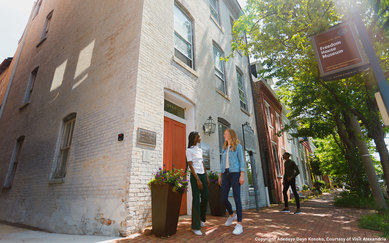
The Role of Fire Protection Engineering: Collaboration Is Key
The most effective fire protection strategies begin early. Engaging fire protection engineers with specialized experience in historic preservation and museum and collections environments helps ensure that systems are designed to align with curatorial priorities, architectural and preservation intent, and long-term operational needs. Early collaboration reduces redesign, streamlines approvals, and results in solutions that are both compliant and context sensitive.
Historic buildings and adaptive reuse projects frequently require creative and highly customized solutions to discreetly conceal new systems, sometimes employing a performance-based design strategy. Coordinating system routing, equipment placement, and architectural preservation requires close collaboration among all design disciplines. Clear operational protocols, especially during system maintenance or exhibit turnover, are essential to maintaining system reliability throughout the life of the building.
Protecting People, Collections, and Historic Structures
Life safety is always the top priority, but in museums, protecting the building and collections is also central to the mission. Fire suppression system selection should consider environmental stability, artifact sensitivity, and building constraints. Wet pipe systems are generally considered most effective and reliable for most conditions, but working with a Fire Protection Engineer with museum experience will enable informed decision making around the appropriate use of dry pipe, preaction, and other alternative suppression systems to suit environmental and collection risk profiles.
Early fire detection is equally critical. Spot smoke detection may be appropriate in galleries, while air‑sampling systems provide very early warning in sensitive or high risk spaces. Alarm notification strategies should meet code requirements while minimizing visual impact to any historic building fabric and reducing nuisance alarms that can disrupt operations.
A Real‑World Example: Modern Safety in a Historic Gallery
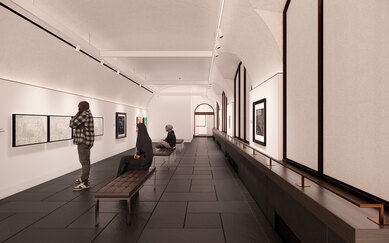
The renovation of the Schwartz Gallery at the Detroit Institute of Arts demonstrates how collaboration is enabling successful outcomes. In the nearly century-old building, fragile plaster ceilings, limited ceiling access, and an aging clean agent system protecting sensitive collections required replacement. The SmithGroup design team recommended a combination of double‑interlock preaction system and a modern clean agent system, paired with air‑sampling smoke detection to provide early warning without visual disruption. Building systems installation is avoiding demolition wherever possible, including minimizing disturbing the gallery's fragile plaster ceilings.
The renovation is also addressing environmental issues, integrating new HVAC systems, and coordinating with existing fire protection systems elsewhere in the museum. Through sustained collaboration among SmithGroup’s team and DIA’s curators and operations staff, the gallery is being modernized while preserving its historic character.
Fire Safety is Shared Museum Stewardship
Protecting people, collections, and historic structures is a shared responsibility that defines successful fire safety planning in museums. In existing and historic buildings, fire protection, fire alarm, and life safety systems should be fully integrated into the museum’s broader stewardship strategy. When approached collaboratively, these systems do more than satisfy regulatory requirements; they support preservation goals, operational continuity, and public confidence.
With early coordination among museum leadership, curators, facilities teams, fire protection engineers, and AHJs, cultural institutions can address the unique risks of aging infrastructure, sensitive collections, and evolving exhibits. Thoughtful system selection, early detection, and adaptable design enable museums to safeguard life and legacy while remaining resilient, flexible, and mission driven for generations to come.
Planning a renovation project at your cultural institution? SmithGroup's new book Building a Museum: This is Not a Manual demystifies planning, designing and constructing a museum capital project.