The Structural Path to Zero
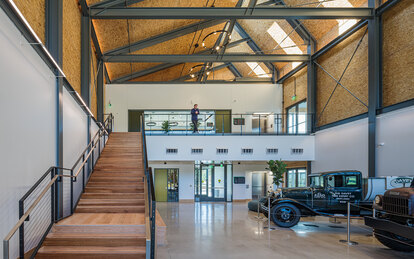
As the focus on reducing embodied carbon grows, structural engineers have a key role to play in paving and reinforcing our way to a low-carbon future.
Key Takeaways
Reducing the embodied carbon in building materials and construction has become a critical piece of the decarbonization puzzle. Three design strategies targeting structural systems can help building designers and owners realize significant reductions in embodied carbon:
- Optimize structural design early to right-size systems and to re-use and select materials that reduce unnecessary carbon.
- Measure and target a design’s carbon hotspots by setting Global Warming Potential (GWP) limits and using readily available data sets and analytical tools like Whole Building Life Cycle Assessments (WBLCAs) and Environmental Product Data Declarations (EPDs).
- Establish low-carbon material standards for use across multiple projects to scale up reductions.
Well before the lights or heating/cooling systems get switched on, significant amounts of greenhouse gas emissions have already been expended through the production of a building’s materials and its construction. Known as embodied carbon, this upfront contribution to a building’s lifetime carbon footprint has been gaining more attention as operational performance has improved. With new buildings increasingly able to reach net-zero energy, embodied carbon can represent 50-80% of total lifecycle emissions.
Since a third to half of a building’s embodied carbon resides in its structural systems, engineers have a critical role to play in advancing total decarbonization. The recognition of this responsibility and opportunity led to the launching of the SE 2050 Commitment Program in 2020. As a signatory and contributor to the program, SmithGroup is measuring and reporting the embodied carbon impacts of our structural designs to SE2050’s public database, sharing benchmarks and strategies to advance the profession towards the ultimate goal of net zero carbon.
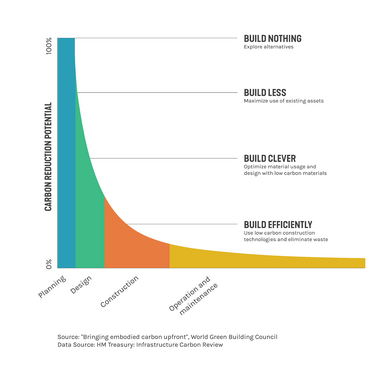
When adaptive reuse isn’t an option, the greatest potential for carbon reduction occurs during the early planning and design stages for a new building, when key decisions regarding material selection and sizing establish most of a building’s embodied carbon.
Three Foundational Steps on the Path to Zero
Because concrete, steel and site materials account for much of a project’s embodied carbon, the structural path to zero starts with a few high-impact decisions. Structural and civil engineers can drive meaningful reductions through early system optimization, analysis and refinement of a design’s carbon impacts, and low-carbon material specifications.
Applying these three design strategies can deliver significant decarbonization results while remaining practical and cost-effective.
Optimize Structural Systems Early
Two of the biggest sources of embodied carbon in structural systems are steel and concrete. Modeling and evaluating the use of low-carbon materials like mass timber during the schematic design phase allows for multiple options to be compared for performance and cost.
In the example shown here, we were able to compare the carbon reduction potential of different structural options and select a hybrid mass timber and steel structure. This resulted in an almost 30% carbon reduction before the power was turned on.
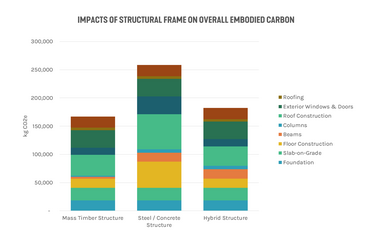
Quantifying the relative carbon reduction potential and costs of structural design alternatives early in the process is key to finding the most impactful solution that fits the project budget.
Every project also provides an opportunity to develop new standards and language aimed at greening our master concrete specifications; these carbon savings can be applied to the sitework as well as the building. For one recent project we engaged the contractor and concrete suppliers to reduce the embodied carbon of the concrete used by 40%. The concrete supplier even developed Environmental Product Declarations (EPDs) for all their products going forward as a result, significantly scaling up the future decarbonization potential.
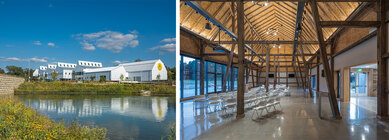
The Davey Tree SEED Campus features embodied carbon reductions at the building and campus scale.
Measure and Target Carbon Hotspots
The new Davey Tree SEED Campus in Kent, Ohio pursued both LEED and Sustainable Sites Initative (SITES) certifications to showcase the client’s commitment to campuswide sustainability. This project built upon previous lessons learned and effective collaboration between the integrated design team, client and contractor to achieve notable reductions in embodied carbon.
The reductions were achieved through a combination of low-carbon concrete, foundation design that reduced concrete volumes, and efficient, long-span structural systems that maximize usable space with a streamlined steel frame. Material reuse further lowered the project's carbon footprint through the incorporation of reconstructed historic barn timbers and repurposed trees harvested on site.
The structural team performed a Whole Building Life Cycle (WBLCA) to measure the impact of the low carbon concrete and steel used. This analysis revealed a 40% carbon reduction compared to other design options.
To extend these low-carbon strategies to the 200-acre campus, a comprehensive analysis was performed for the site hardscape, exploring alternatives for pavers, concrete, and asphalt. Through the use of slag cement, warm-mix asphalt, wood pavers and materials with high recycled content, the site design eliminated 589 tons of carbon emissions.
In addition to serving as an embodied carbon pilot project for the SITES program, Davey Tree SEED was one of 24 projects worldwide selected for a whole life carbon study pilot program by MEP2040, expanding the project’s pioneering role in reducing embodied carbon in building systems.
Establish Low-Carbon Material Standards
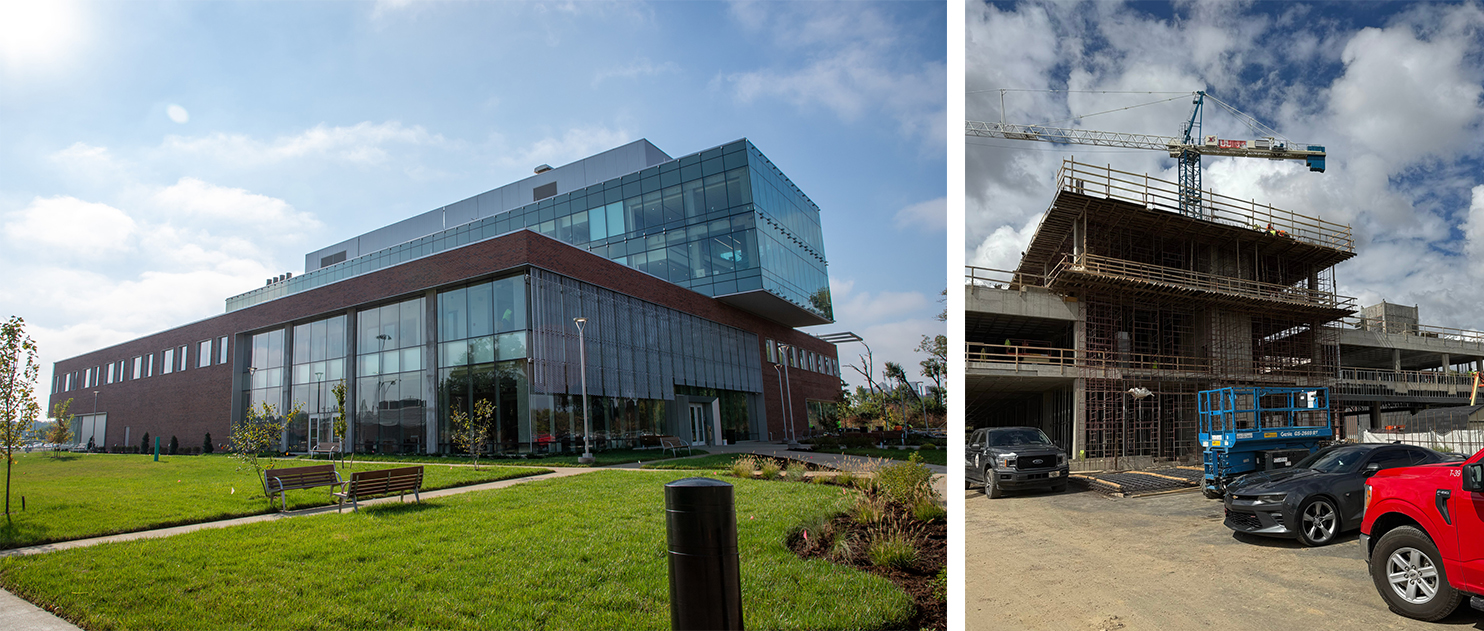
Building on our previous work, we implemented the latest version of our cast-in-place concrete specification on the University of Louisville’s Engineering Student Success & Research Building for the J.B. Speed School of Engineering. Following selection of a concrete structure for the design, we worked closely with our partner Luckett & Farley as well as the contractor and suppliers to establish carbon reduction targets and specify suitable materials.
To assist in our evaluation, we used Environmental Product Declarations (EPDs) to confirm that each material and concrete mix met a 35% Global Warming Potential (GWP) reduction target.
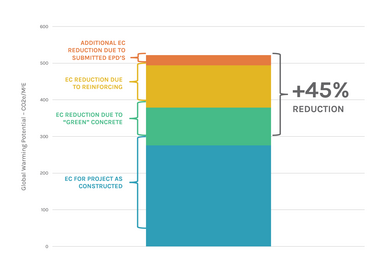
The use of low-carbon concrete mixes and reinforcing steel with 97% recycled content resulted in a 45% embodied carbon reduction.
Beyond the significant carbon savings achieved here, the continued refinement and successful use of our new material specifications will generate lasting benefits across multiple projects.
A Shared Path Forward
In terms of economic performance, the carbon-reducing strategies highlighted here have incurred minimal, if any, cost increase for our projects. But perhaps most important is the ripple effect we’re seeing that extends beyond a single project to our design teams, partners, clients, contractors and the A/E industry more broadly.
While I’m proud that SmithGroup was honored with SE2050’s 2025 Best in Reporting recognition that included these projects, the ultimate impact of that effort lies in building a collective database with our peers to advance a shared commitment to decarbonization. Whether it’s advancing new methods of embodied carbon accounting or developing new material specifications and EPDs, these collaborative outcomes are paving our path towards a net-zero future.