Connecting the Data Dots: Why Multiple Analyses Matter in Space Planning
Key Takeaways:
- Space utilization relies on interconnected methods: utilization, occupancy, benchmarking, and needs analyses. It’s not a single metric but a multifaceted framework for understanding space use.
- A comprehensive study combines scheduling data, occupancy patterns, benchmarks, and stakeholder input for a holistic view of supply, demand, and experience.
Truly and accurately understanding space utilization is a common but challenging goal for many institutional stakeholders. What seems like a simple question – how are spaces used? – often leads to complex answers. To make smarter space planning decisions, start by gathering the right data. Here are four proven approaches that will deliver needed insight:
1. Analyzing Scheduling Data
The most typical interpretation of space utilization in higher education involves analyzing scheduling data to determine how often spaces are scheduled. This method calculates the proportion of time a space is scheduled and compares it to established targets—such as classroom usage guidelines or departmental norms. For example, a university might aim for general-purpose classrooms to be scheduled at least 30 hours per week. If a room is only booked for 12 hours, it may be flagged as underutilized. One limitation of this approach is that it only captures planned use, not actual occupancy or activity within those spaces.
2. Occupancy Analysis
To gain a fuller picture of real-time usage, institutions can turn to occupancy analysis. Historically, this was conducted through informal observation—such as facilities staff walking the campus and noting which rooms appeared empty. Today, this can be enhanced through emerging occupancy sensing technologies that track movement or presence. For example, a seminar room where occupancy is being tracked might show that although it’s scheduled daily, it’s only occupied 50% of the time, suggesting cancellations or no-shows. For spaces where courses are scheduled, this technology can also reveal that the typical attendance in the space varies from the anticipated enrollment data. Conversely, a student lounge may show high occupancy throughout the day despite having no formal bookings, indicating informal but meaningful use.
3. Space Benchmarking
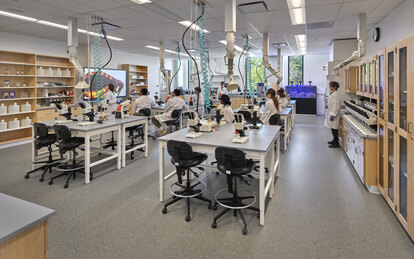
Meanwhile, space benchmarking (studying similar space types at peer institutions) adds another dimension to assessing space utilization, in that it provides context for understanding whether current allocations are appropriate, based on factors such as program size, pedagogical model, or institutional mission. For example, a science department might provide 1,200 square feet of lab space per faculty member, while selected peer institutions average 900 square feet. This observation could prompt a review of whether the allocation is justified by research intensity, teaching load, or other factors.
4. Space Needs Analysis
Finally, a space needs analysis focuses on identifying how much and what kind of space is required to support institutional functions. This type of analysis usually builds on analyses of scheduling and occupancy and integrates both quantitative metrics and qualitative insights gathered through stakeholder engagement. For example, a music program’s scheduling data may indicate that its rehearsal spaces are booked solid, but faculty and students also express that said spaces are acoustically inadequate and poorly located. This feedback, combined with scheduling and occupancy data, helps planners understand not just how much space is needed, but what kind of space will best support the program’s goals, both today and tomorrow. The space needs analysis quantifies and qualifies a desired future state in response to the challenges and opportunities of the current state.
Conclusion
Taken together, these approaches illustrate that a space utilization analysis is not a single measurement, but a multifaceted framework for understanding space use. A comprehensive space utilization study draws from multiple sources – scheduling data, occupancy patterns, benchmarking comparisons, and stakeholder input – to develop a holistic view of how space is supplied, demanded, and experienced. It moves beyond surface-level measurements to uncover deeper insights into how physical environments support institutional goals and day-to-day activities.