Advancing Wellness in Dental Education
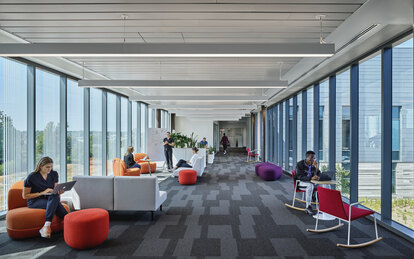
Kansas City University College of Dental Medicine
Key Takeaways:
- Many dental schools still operate in buildings designed before mental health and wellness were recognized as essential to training clinicians.
- ADEA’s recent focus on burnout, depression and suicide has accelerated the push for resilience and wellbeing, highlighted by SmithGroup’s 2026 Idea Exchange.
- True progress requires embedding wellness into the culture itself: aligning, environments, policies and spatial planning so wellbeing becomes routine practice rather than an optional program.
Dental schools carry a long legacy of excellence with decades spent training generations of oral health professionals. Yet many of these institutions were built in an era when conversations about mental health, wellness and wellbeing were limited or entirely absent.
Today, even with increased investment in wellness initiatives, faculty and students often struggle to engage meaningfully. Time pressures, clinical demands and systemic expectations create barriers that contribute to burnout and declining mental health.
Recognizing these challenges, the American Dental Education Association (ADEA) has taken significant steps to support clinician wellbeing and resilience, issuing recommendations to address burnout, depression and suicide across the profession. Building on this momentum, SmithGroup hosted an Idea Exchange at the 2026 ADEA Annual Session focused on advancing wellness in dental education.
A clear theme emerged: dental education must move beyond offering wellness programs and instead embed wellbeing into its culture. Educational, clinical and patient environments should be intentionally crafted to support the whole person, while institutional policies align with human capacity and thoughtful spatial planning. When these elements work together, wellbeing becomes part of everyday practice, not an optional add‑on.
Designing Environments for Daily Wellbeing
The physical environment plays a critical role in supporting faculty and student wellbeing, and thoughtful design can make that support part of everyday experience. Key elements include:
- Ergonomics: Promotes physical comfort and reduces long‑term strain during patient care
- Daylighting: Supports circadian rhythms during long clinical and academic hours
- Lighting Quality: Minimizes eye strain and fatigue
- Acoustics: Ensures privacy and psychological safety, especially in student support areas
- Dedicated Support Spaces: Provide opportunities for restoration, reflection, and connection
Integrating VR and AR tools early in the design process helps teams visualize these elements and refine spaces before construction begins. Physical mock‑ups then allow for real‑time feedback and adjustments, ensuring optimal body mechanics and user experience.
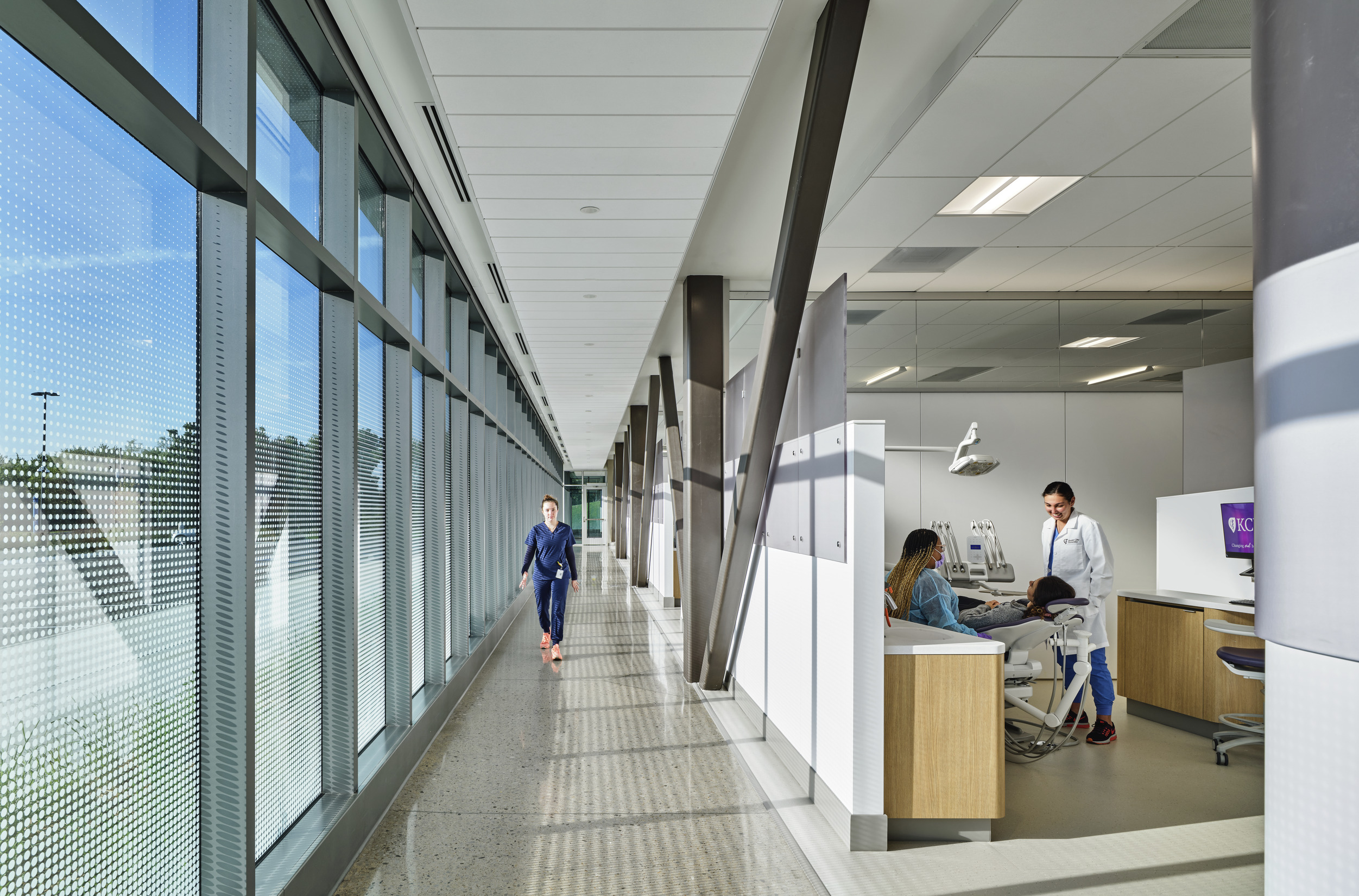
This human‑centered approach is exemplified at Kansas City University College of Dental Medicine, where patients enter through a window‑lined corridor that creates a bright, welcoming environment while giving every operatory access to natural daylight. Daylight‑analysis tools informed the placement of shading devices, balancing the benefits of daylight with the need to reduce glare and visual fatigue for both patients and providers.
Policy and Culture Matter Just as Much as Space
Even the best‑designed facilities cannot fully support wellbeing without policies and culture that reinforce healthy behaviors. Three priorities consistently rise to the top:
- Protect time: Faculty need dedicated space in their schedules to recharge and participate in wellness resources. Without protected time, even the strongest programs go unused.
- Align roles: Enabling faculty to practice at the highest level of their training improves satisfaction, reduces inefficiencies and strengthens the overall learning environment.
- Culture of care: A supportive culture requires faculty engagement in student wellbeing. When faculty model and prioritize care, it shifts expectations across the profession.
A strong example is the “Bite and Bond” program at the University of Florida, led by Dr. Patricia Xirau Probert. Faculty and students meet in small groups to discuss life beyond academics, creating space to explore the personal and professional challenges unique to oral health providers. These informal, structured conversations humanize faculty, build trust and give students safe pathways to seek support. Programs like this show that relationships, not just resources, drive meaningful wellbeing outcomes and help students build healthy habits that carry into practice.
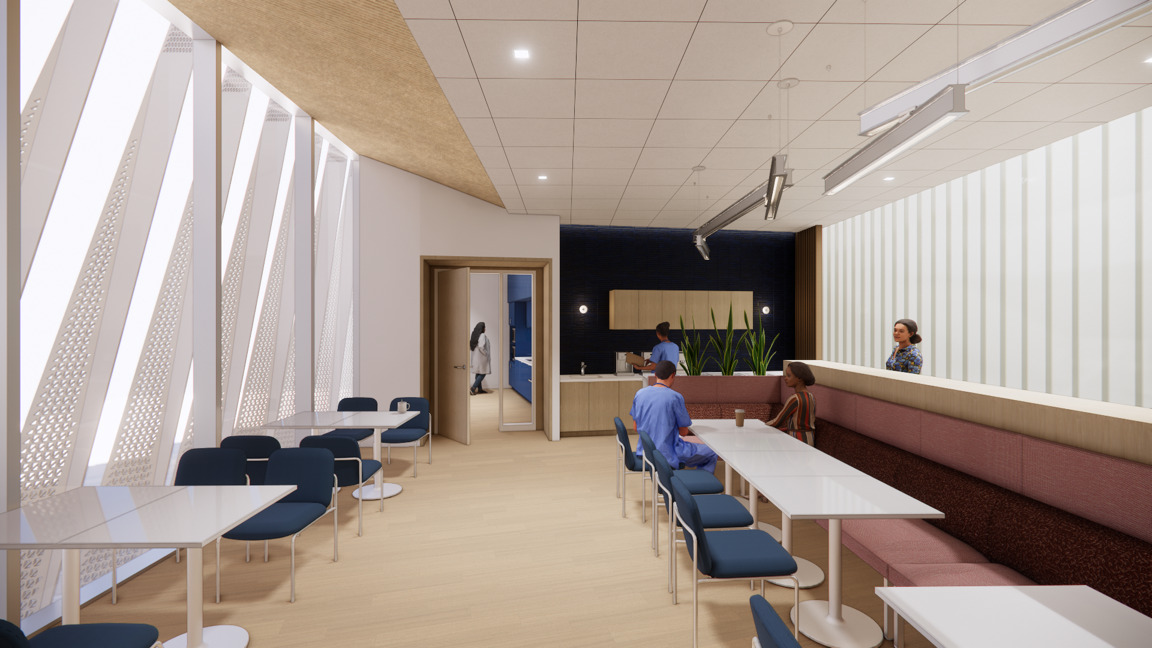
To further reinforce this culture of wellbeing, the University of Florida integrated these values into the renovation and addition for the College of Dentistry. Daylit breakrooms adjacent to clinics encourage faculty and staff to pause, collaborate and recharge. Multi functional consultation rooms within clinics offer private spaces for real time conversations, strengthening psychological safety for students and supporting the same relational approach modeled in Bite and Bond.
Bridging the Gap
A persistent challenge in dental education is the gap between wellness resources and true accessibility. Programs may exist, but without protected time, cultural alignment and intentional integration, their impact is limited. Real progress depends less on adding amenities and more on creating the time, culture and commitment people need to thrive.